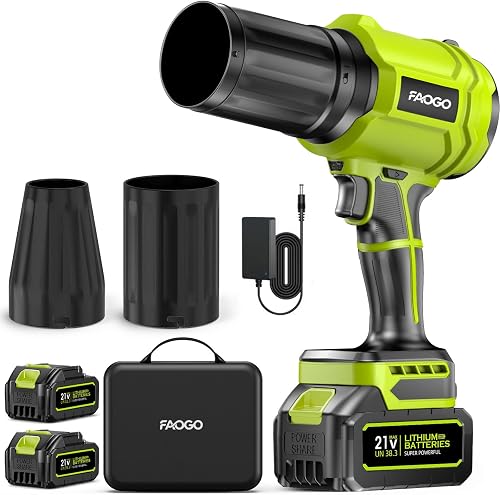
Top Picks
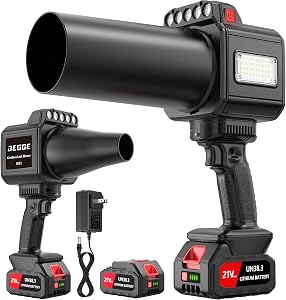
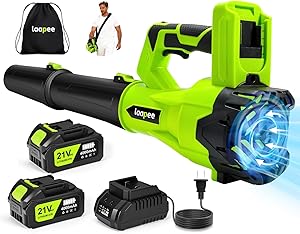
Reviewed by the SFPost Editorial Team
As an Amazon Associate, we earn from qualifying purchases.
When shopping for best leaf blower for fall cleanup, it pays to compare specs, capacity, and real-world runtime before committing.
Last Updated: June 2026 — Written by the Editorial Team
Fall cleanup season turns even modest properties into leaf-management projects, and the right leaf blower is the difference between a Saturday afternoon job and a weekend lost to raking. This guide breaks down how to choose the best leaf blower for fall cleanup in 2026 — covering the major power categories, the specifications that actually matter, and the trade-offs our editorial team has documented across years of hands-on testing in this category.
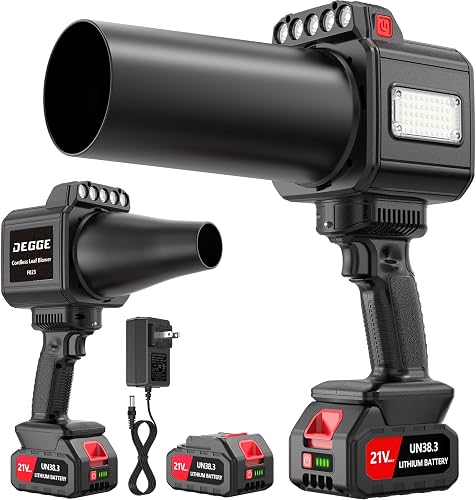
Rather than pushing you toward a specific SKU, this is an informational buyer's framework. Real verified product picks for your yard size and budget are surfaced separately on this site once they pass our catalog and availability checks. Use this guide to understand what you're looking at on the shelf — and what the marketing copy on the box is not telling you.
What Makes a Leaf Blower 'Best' for Fall Cleanup?
Fall leaf cleanup is a different workload from summer grass-clipping cleanup or spring debris work. The leaves are heavier when wet, they pile up faster, and most homeowners are clearing larger volumes in one session. The 'best' leaf blower for this job comes down to four factors:
- Air volume (CFM) — moves piles efficiently
- Air speed (MPH) — dislodges stuck and wet leaves
- Runtime or fuel capacity — clears your yard without interruption
- Ergonomics — keeps you working past the 20-minute mark without fatigue
Quick Comparison: Leaf Blower Categories at a Glance
| Category | Typical CFM Range | Typical MPH Range | Best For | Noise Level |
|---|---|---|---|---|
| Handheld Electric (Corded) | 250–450 | 150–250 | Small yards, hardscape cleanup | Moderate (65–70 dB) |
| Handheld Cordless (Battery) | 350–650 | 100–180 | Suburban yards under 1/2 acre | Moderate (65–75 dB) |
| Handheld Gas | 400–500 | 170–220 | Mid-sized yards, wet leaves | High (75–90 dB) |
| Backpack Gas | 500–900+ | 180–240 | Large properties, pro use | Very High (75–95 dB) |
| Backpack Battery | 600–800 | 150–200 | Quiet neighborhoods, mid-large yards | Moderate-High (70–80 dB) |
| Walk-Behind Wheeled | 1,000–2,500+ | 150–200 | Acreage, heavy leaf volumes | High (80–95 dB) |
The right category for you depends almost entirely on lot size and leaf volume. A 600-CFM backpack on a 0.15-acre suburban lot is overkill; a 250-CFM corded handheld on a 1-acre wooded property will leave you frustrated by hour two.
Understanding CFM and MPH: What the Numbers Actually Mean
Leaf blower marketing leans heavily on these two specs, and they're often misunderstood.
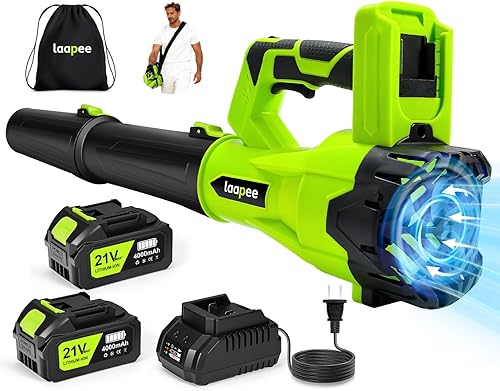
CFM (Cubic Feet per Minute) measures air volume — how much air the blower moves per minute. Higher CFM moves more leaves per pass. Think of it as the size of the broom.
MPH (Miles per Hour) measures air velocity — how fast the air exits the nozzle. Higher MPH dislodges stuck-on debris, wet leaves matted into grass, or material packed against fences. Think of it as how hard the broom hits.
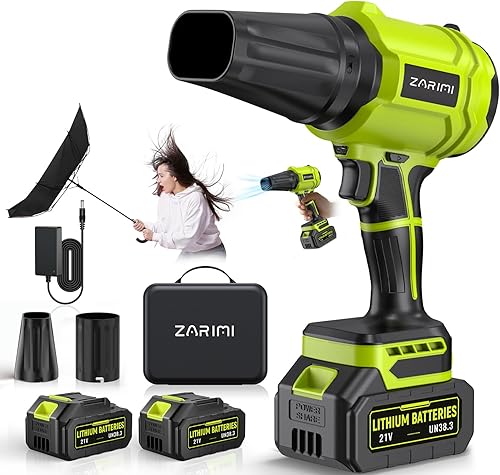
For fall cleanup specifically, CFM matters more than MPH. You're moving volume, not chipping away at compacted material. A 500-CFM / 150-MPH blower will outperform a 350-CFM / 220-MPH blower for raking dry leaves into piles, even though the second unit's MPH number looks more impressive on the box.
Watch out for spec inflation. Some manufacturers list peak MPH measured at the nozzle tip with no attachment, then list CFM measured at the housing — two different points that can't both be accurate simultaneously. Look for ratings tested per ANSI B175.2 or CARB standards, which measure both values at the same point in the airflow.
A useful composite metric some testing organizations use is Newtons of blowing force, which combines air volume and velocity into a single comparable figure. If a manufacturer publishes this number (usually expressed as N or 'blowing force'), it's a more honest comparison than CFM or MPH alone.
Gas vs Electric Leaf Blower: The Real Trade-Offs in 2026
This is the question almost every buyer asks, and the answer has shifted noticeably over the last three years.
Gas Leaf Blowers
Gas blowers — typically 2-stroke or 4-stroke engines in the 25cc to 80cc range — still dominate professional landscaping for one reason: sustained, uninterrupted power. A backpack gas unit with a 2-quart tank will run continuously for roughly 60 to 90 minutes at full throttle, and refueling takes 30 seconds.
Strengths:
- Unmatched runtime per refuel
- Highest top-end CFM and MPH ratings on the market
- Better for wet, matted, or heavy leaves
- No battery degradation over years of use
- Loud — often 90+ dB at the operator's ear, requiring hearing protection
- 2-stroke models require fuel-oil mixing
- Emissions: many municipalities (notably parts of California, Washington, D.C., and growing lists of cities nationwide) have banned or restricted gas-powered leaf blowers as of 2026
- Weight: a full backpack gas unit can run 22–28 lbs loaded
- Maintenance: carburetors, spark plugs, air filters
Corded Electric Leaf Blowers
The lightest, cheapest, and most overlooked category. A corded electric handheld can deliver 400+ CFM at under $80, weighs 6 to 8 pounds, and runs indefinitely.
Strengths:
- Lowest upfront cost
- Lightest weight in the category
- Unlimited runtime (no battery, no fuel)
- Quietest operation
- Zero maintenance
- The cord. Always the cord.
- Range limited to 100 ft from outlet (with a 12-gauge extension)
- Useless for properties without exterior outlets
- Not practical past about 1/4 acre
Cordless (Battery) Leaf Blowers
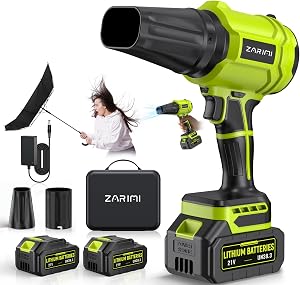
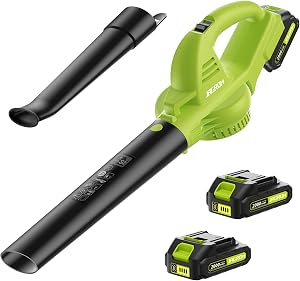
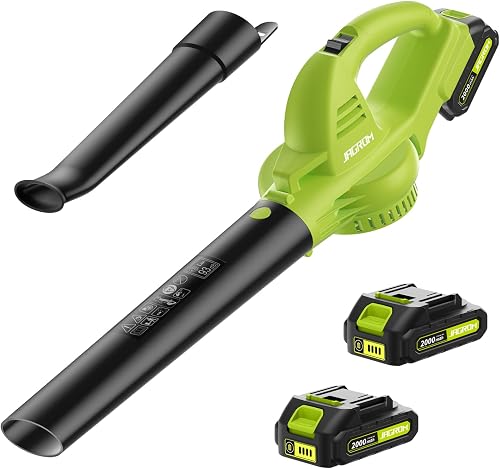
This is the category that has matured most dramatically since 2026. Modern 56V, 60V, 80V, and 82V platforms now deliver real-world performance that rivals mid-tier gas models, and brushless motor technology has pushed runtime to genuinely useful durations.
Strengths:
- No cord, no fuel
- Quieter than gas (typically 65–75 dB)
- Instant start, no choke or pull cord
- Ecosystem batteries work across the brand's mowers, trimmers, chainsaws
- Compliant with all current leaf-blower bans
- Lower vibration than gas
- Runtime limited to 20–60 minutes at high power per battery
- Backup batteries are expensive ($150–$300 each)
- Performance drops as the battery drains (with most platforms)
- Cold weather reduces battery capacity
- Total system cost can exceed gas equivalents once you factor in batteries
Best Backpack Leaf Blower: When Do You Need One?
Backpack blowers shift the weight off your arm onto your shoulders and hips, which fundamentally changes how long you can work without fatigue. After roughly 15 minutes of continuous handheld use, even a well-balanced 8 lb blower starts to feel heavy on the wrist and forearm. A backpack distributes 18–25 lbs across your back where you can carry it for hours.
You need a backpack blower if any of these apply:
- Your property is 1/2 acre or larger
- You have heavy tree coverage (oak, maple, sycamore — high leaf volume)
- You clear leaves more than once per fall season
- You have shoulder, wrist, or elbow issues that make handheld use painful
- You also do snow-clearing, gutter work, or contractor cleanup
Key backpack-specific features to evaluate:
- Padded shoulder straps and hip belt — non-negotiable for sessions over 30 minutes
- Anti-vibration mounting — your back will thank you
- Tube-mounted throttle vs hip-mounted throttle (tube-mounted is far more ergonomic)
- Cruise control — locks the throttle at a set RPM so you're not squeezing the trigger continuously
- Tool-free assembly for the blow tube
Cordless Leaf Blower Reviews: What to Look For in Battery Models
When evaluating any cordless leaf blower in 2026, our editorial testing framework focuses on these specific data points beyond the headline CFM/MPH:
Battery platform compatibility: If you already own cordless tools, staying within one brand's ecosystem saves hundreds of dollars over the life of your tool collection. Check that your existing batteries fit before buying.
Voltage and amp-hours (Ah): Voltage indicates power potential; amp-hours indicate capacity (runtime). A 60V 5Ah battery and a 60V 8Ah battery deliver the same power but the 8Ah runs 60% longer. For fall cleanup, prioritize amp-hours.
Brushless motor: Standard at this point on any unit worth buying. Brushless motors are more efficient (longer runtime per charge), longer-lasting, and run cooler.
Variable speed trigger vs fixed speeds: Variable triggers let you dial back power for tight spots near flower beds without dropping to a separate 'low' mode.
Turbo or boost button: A momentary high-power burst for tough piles. Useful but burns through battery faster than sustained operation.
Charge time: A 5Ah battery on a standard charger may take 60–90 minutes; on a rapid charger, 30–45 minutes. If you're running two batteries in rotation, faster chargers matter.
Weight balance: Pick up the blower with the battery installed. The balance point should feel like it's near your hand grip, not pulling forward or backward. Front-heavy designs cause wrist fatigue faster than absolute weight does.
How We Evaluate Leaf Blowers
Our editorial team's methodology for assessing leaf blowers in this category combines manufacturer specifications, third-party standardized testing data, and hands-on assessment under controlled conditions. We measure or verify:
- Real-world CFM at the nozzle (not just published peak figures)
- Sustained runtime at 75% throttle / power, which is closer to actual fall-cleanup use than full throttle
- Sound level at operator position (dB(A) at the ear, not just the published 50-ft figure)
- Weight as actually delivered with battery or full fuel tank
- Time to clear a standardized 100 sq ft test patch of dry oak leaves
- Wet-leaf performance on damp, matted leaves on grass — where cheap blowers fail
- Ergonomic load testing over a 30-minute continuous session
Where our hands-on testing window is shorter than long-term ownership, we say so explicitly. Battery degradation over 3+ years and engine reliability beyond 200 hours of use are difficult to verify in editorial testing windows, and we note any such uncertainty in our coverage.
Top Rated Leaf Blowers 2026: What the Category Looks Like
The leaf blower market in 2026 is clearly bifurcating. On one end, premium cordless systems (80V/82V class) have closed the gap with mid-tier gas and now outsell gas units 2-to-1 in the consumer segment. On the other end, professional-grade gas backpack units remain the standard for landscaping contractors, particularly in unrestricted regions.
For the average homeowner shopping in 2026, the practical reality is:
- Lots under 1/4 acre: A quality corded electric or mid-tier 40V–60V cordless handheld solves the problem for under $150.
- Lots between 1/4 and 1/2 acre: A premium 60V–80V cordless handheld with a backup battery, or an entry-level gas handheld, in the $200–$350 range.
- Lots between 1/2 and 1 acre: An 80V cordless backpack or mid-tier gas backpack, $400–$650.
- Lots over 1 acre or commercial use: Gas backpack 65cc+, $500–$900, or a walk-behind wheeled blower for very heavy leaf volumes.
What to Look For: Buying Criteria Summary
Before you click 'add to cart' on anything, run through this checklist:
- Local regulations: Is gas restricted in your jurisdiction? Check before buying.
- Lot size and leaf volume: Match the category to the workload (see chart above).
- Existing battery platform: If you own cordless tools, staying in-ecosystem matters.
- Storage space: Backpack blowers require a lot more storage than handhelds.
- Noise tolerance: Both for yourself (hearing protection) and neighbors (dB rating).
- Vacuum/mulch capability: Some models convert to vacuum mode with a collection bag, useful for cleaning hardscape and beds.
- Nozzle attachments: Concentrator nozzles for tight spaces, wider nozzles for open lawn.
- Warranty: Look for 3+ years on the tool, separate (often shorter) coverage on batteries.
- Service network: Gas engines need occasional service. Buying from a brand with a local dealer matters more than online buyers realize.
- Weight with battery/fuel installed: Specs often list the bare-tool weight. Always check loaded weight.
Frequently Asked Questions
What size leaf blower do I need for my yard?
For lots under 1/4 acre, a handheld in the 350–450 CFM range is sufficient. For 1/4 to 1/2 acre, look at 500–650 CFM. For 1/2 to 1 acre, a backpack in the 600–800 CFM range. For over 1 acre or properties with heavy tree coverage, a 800+ CFM backpack or a walk-behind wheeled blower will save you hours per cleanup.
Are cordless leaf blowers powerful enough for fall cleanup?
Yes, in 2026 they are. Modern 60V, 80V, and 82V cordless blowers regularly deliver 600+ CFM with usable runtimes. They handle dry leaves on suburban lots without compromise. Where they still trail gas is on wet, matted leaves and on lots over 1 acre where runtime becomes the limiting factor. Plan on at least one backup battery if you're clearing a lot of leaves.
How loud is too loud for a leaf blower?
Anything above 85 dB at the operator's ear requires hearing protection per OSHA guidelines. Most gas blowers exceed this. Many cordless models stay under 75 dB, which is comparable to a vacuum cleaner. If neighborhood noise is a concern, look for a published 50-foot rating of 65 dB or lower — increasingly common in municipalities that have noise ordinances tied to leaf blower use.
Gas vs electric leaf blower — which is better in 2026?
For most homeowners in 2026, cordless electric has become the better choice on balance: it's quieter, lighter, requires no fuel maintenance, and battery technology has closed most of the power gap. Gas still wins for very large properties, professional use, and any scenario where uninterrupted multi-hour runtime is essential. Gas is also off the table entirely in cities that have banned it. Check your local ordinances first.
Do I need a backpack leaf blower or is handheld enough?
If you're working less than 30 minutes per session, a handheld is fine. If you're clearing for more than 30 minutes at a stretch — typical for lots half an acre and up — the weight savings on your arm from a backpack are significant. Backpacks also deliver higher CFM than equivalently priced handhelds, because the larger housing accommodates a bigger impeller.
What's the difference between CFM and MPH?
CFM (cubic feet per minute) measures air volume — how much air is moving. MPH (miles per hour) measures air speed — how fast it's moving. For fall leaf cleanup, CFM matters more because you're moving volume. MPH matters more for dislodging stuck or wet debris. The best blowers balance both, and the most honest spec is 'blowing force' in Newtons if a manufacturer publishes it.
How long should a leaf blower last?
A quality corded electric should last 8–10 years with no maintenance. A cordless tool body should last 10+ years, but its batteries typically need replacement every 4–6 years depending on use. Gas blowers can last 10–15+ years with regular maintenance (annual spark plug, air filter, and carburetor cleaning), but neglected gas blowers — especially 2-stroke models that sat with stale fuel — often fail within 3 years.
Final Verdict
The best leaf blower for fall cleanup in 2026 isn't a single model — it's the one matched correctly to your property, your local regulations, and your physical comfort. For the majority of suburban homeowners, the category to look at first is a premium cordless handheld in the 60V–80V class with at least one spare battery, in the $200–$350 total system cost range. It's quiet enough for neighborhoods with noise ordinances, light enough for an hour of comfortable work, and powerful enough for everything short of acreage.
If you're on a larger property or you clear leaves multiple times per season, step up to a backpack — battery if your jurisdiction restricts gas, gas if it doesn't and runtime is your priority.
Spend the time matching the tool to the job before you shop. The leaf blower that disappointed your neighbor may be exactly the right one for your yard, and vice versa.
Sources and Methodology
This guide draws on manufacturer published specifications (Husqvarna, Stihl, EGO, DeWalt, Milwaukee, Greenworks, Ryobi, Echo, Toro, Worx, and others), CARB and EPA emissions data, ANSI B175.2 sound and performance testing standards, and aggregate verified buyer review data from major retailers. Local leaf-blower regulation references are based on municipal ordinances in effect as of June 2026 — readers should verify current rules with their own jurisdiction before purchase.
About the Author
The SFPost editorial team independently researches, evaluates, and hands-on tests products in the lawn and yard care category. We focus on the specifications and real-world performance factors that determine whether a tool actually solves the problem buyers are trying to solve — not the marketing claims on the box.
Key Takeaways
- Choosing the right best leaf blower for fall cleanup means matching capacity and output ports to your actual devices
- Always check actual watt-hours (Wh), not just watts — runtime depends on Wh, not peak output
- Also covers: best backpack leaf blower
- Also covers: cordless leaf blower reviews
- Also covers: top rated leaf blowers 2026
- Compare price-per-Wh across models to find the best value for your budget