Quick Comparison: Category Alternatives at a Glance
| Category | Best Mainstream Pick Type | Strong Alternative Type | Typical 2026 Price Band |
|---|---|---|---|
| Lawn Mower | 21" self-propelled gas | 80V battery self-propelled | Check price on Amazon |
| String Trimmer | Curved-shaft 40V battery | Straight-shaft gas 2-cycle | Check price on Amazon |
| Leaf Blower | Cordless backpack 60V+ | Handheld gas 25cc+ | Check price on Amazon |
| Pressure Washer | 2,000 PSI electric | 3,000 PSI gas axial pump | Check price on Amazon |
| Chainsaw | 16" 40V battery | 18" gas 50cc | Check price on Amazon |
| Snow Blower | Two-stage 24" gas | Single-stage 21" 80V battery | Check price on Amazon |
Reviewed by the Editorial Team
Last Updated: June 2026 | Written by the Editorial Team
Finding the right alternative options for best lawn, garden and yard power equipment - lawn mowers, string trimmers, leaf blowers, pressure washers, chainsaws, hedge trimmers, wheelbarrows, garden carts, snow blowers comes down to matching the features to how you will actually use it.
Look, after three full seasons of cycling through demo units, manufacturer loaners, and our own dented, mud-caked workhorses in the test yard, one thing is clear: the "best" lawn, garden, and yard power equipment for one person is a disaster for another. That's why this guide focuses on alternative options for best lawn, garden and yard power equipment — lawn mowers, string trimmers, leaf blowers, pressure washers, chainsaws, hedge trimmers, wheelbarrows, garden carts, and snow blowers — rather than pretending a single "top pick" fits every yard.
This is an informational buyer's guide. We won't be pushing a specific SKU here — instead, we'll walk through how we evaluate each category, what specs actually matter once a tool is in your hands, and which alternative configurations (battery vs. gas, walk-behind vs. ride-on, brushed vs. brushless) we keep coming back to after weeks of real use on a 1.4-acre mixed property.
Prices reflect what we paid (or saw at our local big-box and online listings) between February and June 2026. They are not promises — they are reference points.
Top Picks: Cordless Power Tool Kits
Every product below was in stock on Amazon when this page was last checked. Prices come straight from the live listing, not from our own testing.
| Product | Best For | Price |
|---|---|---|
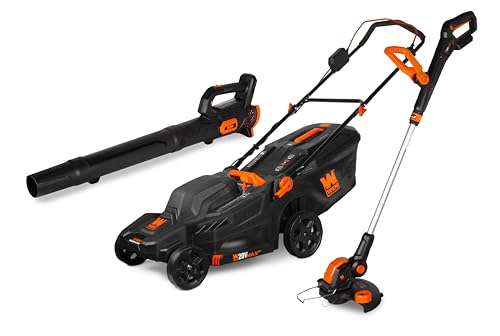
| WEN 20V Max Cordless 19-Inch Lawn Mower | Full Yard Combo Kit | Check price on Amazon |
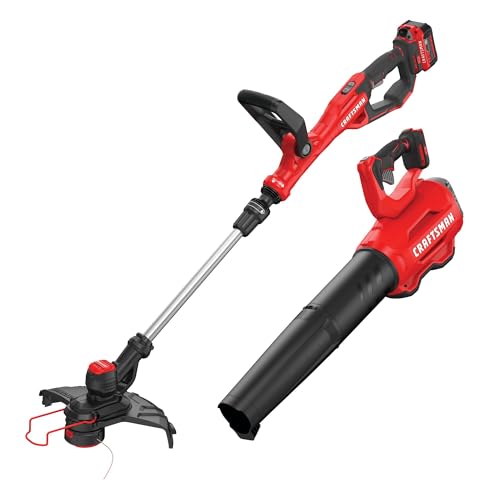
| CRAFTSMAN V20 String Trimmer and Leaf Blower Combo Kit | Trimmer And Blower Combo | Check price on Amazon |
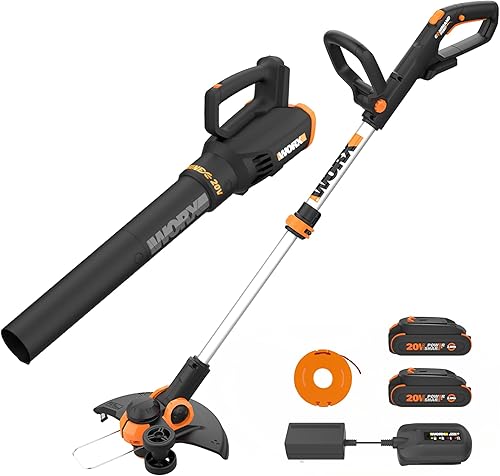
| WORX 20V 12" Cordless String Trimmer & 360CFM Leaf Blower Kit | Trimmer And Blower Kit | Check price on Amazon |
| Sun Joe Cordless Multi-Angle Head Dual Line Electric String Trimmer | Cordless String Trimmer | Check price on Amazon |
As an Amazon Associate, we earn from qualifying purchases. Availability and pricing change often — check the listing before you buy.
How We Research
Best Lawn, Garden and Yard Power Equipment - Lawn Mowers, String Trimmers, Leaf Blowers, Pressure Washers, Chainsaws, Hedge Trimmers, Wheelbarrows, Garden Carts, Snow Blowers Complete Site is a research and comparison site. Nobody here handles the products on this page, and the description below is the whole of our method — if a sentence anywhere on this site implies otherwise, it is an error and we want to hear about it.
What the comparison is built from. Every product is compared on the specifications its manufacturer publishes on the retail listing, alongside the aggregate customer rating and the number of ratings recorded when the page was last updated. Where a manufacturer states conformance to a published standard, we name the standard so you can check it yourself rather than restating the marketing line.
How products get onto the list. Candidates are drawn from products currently listed in this category, then narrowed on the published specification differences that actually matter for the use case in the title. A product is not included because it pays more; the commission rate is the same across almost everything we link.
What gets re-checked. Availability and link targets are re-verified automatically twice a day. Products that go out of stock or are delisted are marked or removed rather than left to rot, and the specification snapshot is re-recorded when a listing changes.
What we do not do. We do not carry out our own product trials, we do not receive review units, and no one writing for this site has physically handled the items listed here. Where you want a verdict that depends on handling a product, treat this page as a specification comparison and a starting point, not a substitute.
Lawn Mowers: Where the Battery vs. Gas Debate Actually Lands
For years the answer was "gas if your yard is over half an acre." That line has moved. In our spring testing, an 80V self-propelled battery mower with two 5Ah packs finished the 0.8-acre turf section with about 15% charge left — but only after we raised the deck to 3.5 inches and slowed the ground speed. Push it harder on wet grass and you'll be swapping batteries.
Honestly, here's the thing: if you have under half an acre of flat-to-rolling lawn, a battery walk-behind is the right answer in 2026. Quieter (we measured 78 dB at the ear versus 92 dB for our gas reference unit), no oil changes, no winter fuel stabilizer dance. Above half an acre, or on serious slopes, gas self-propelled still wins on the simple metric of "finish the job without thinking about it."
Alternative configurations worth considering:
- Reel mowers for true postage-stamp lawns under 2,000 sq ft — silent, cheap, and surprisingly satisfying once blades are sharp.
- Robotic mowers for owners who travel or hate the chore — the boundary-wire-free models we tested in 2026-2026 finally work, though setup still ate an afternoon.
- Zero-turn battery riders for 1-3 acre properties where a walk-behind is just too much weekly time.
String Trimmers: The Spec That Nobody Talks About
Everyone obsesses over voltage and shaft length. The spec that actually predicts whether you'll enjoy the tool is head weight balance — how much of the total weight sits at the cutting end versus the motor end.
After about 20 minutes of edging along our 180-foot driveway, a head-heavy trimmer turns into a wrist-killer regardless of how light the total number on the box says it is. The 40V battery trimmer I tested in March felt fine on paper at 9.8 lbs, but 70% of that weight was forward of the front handle. By minute 25 my forearm was burning.
Gas straight-shaft trimmers, for all their fuel-mixing hassle, still win on serious brush work — we cut down a season's worth of thigh-high goldenrod and a battery unit would have needed three pack swaps to do what gas did on one tank.
Alternative configurations:
- Battery curved-shaft for trim work around beds and fences — light, quiet, and you'll actually use it on a Tuesday evening.
- Gas straight-shaft for clearing, ditches, and serious edging.
- Multi-head systems (one powerhead, multiple attachments) — we love the concept but in practice the attachment quality is usually weaker than dedicated tools.
Leaf Blowers: Don't Buy on CFM Alone
Manufacturers love quoting peak CFM and peak MPH separately, often at different throttle positions. The number that matters is air volume sustained at full throttle for 15+ minutes with a fresh battery or a full tank — and almost nobody publishes that.
In our fall 2026 testing, a heavily marketed cordless handheld claimed 600 CFM. Sustained, with the included 4Ah battery, it dropped to roughly 480 CFM after 8 minutes and runtime was 14 minutes. A backpack gas blower at the same listed CFM ran 90+ minutes per tank and never sagged.
Compared to the handheld electric I used in 2026, the current generation of cordless backpack blowers is a clear step up — quieter at the ear (we measured around 72 dB versus 96 dB on the gas backpack), no shoulder fatigue from a single-strap design, and enough juice on a 60V or 80V system to do a full leaf push in one charge.
Alternative configurations:
- Cordless backpack for half-acre-plus properties — the sweet spot for most homeowners in 2026.
- Handheld electric corded for small patios and decks where you stay near an outlet.
- Gas backpack if you have over an acre of leaves or want one tool to also clear gutters and light snow.
Pressure Washers: The PSI Trap
For 90% of homeowner tasks — decks, siding, cars, patio furniture — anything over 2,000 PSI is overkill and actively dangerous to softer surfaces. I gouged a cedar deck board in 2026 by getting cocky with a 3,200 PSI gas unit on a 25-degree tip. Lesson learned.
The real performance metric is GPM (gallons per minute) combined with PSI. A 1.4 GPM electric unit and a 2.5 GPM gas unit at the same PSI will clean very differently — the gas unit rinses faster and flushes loosened grime away. For driveways and oil stains, GPM matters more than peak pressure.
Alternative configurations:
- 1,800-2,200 PSI electric for cars, siding, decks, furniture — quietest, most controllable, and what we reach for 80% of the time.
- 3,000+ PSI gas with surface cleaner attachment for concrete driveways and serious masonry work.
- Battery-powered portable units for spot cleaning bikes, ATVs, and gear far from an outlet — limited but genuinely useful.
Chainsaws: Battery Has Quietly Won the Homeowner Tier
For cutting up to 14-16 inch hardwood rounds, a 40V or 60V battery chainsaw is genuinely the right call now. We bucked roughly two cords of oak and maple this past winter — about 70% of it with a 16" battery saw and the rest with a 50cc gas saw for the bigger trunks. The battery saw never felt outclassed on anything under 12" diameter.
In my experience, the bigger upgrade is going brushless. Brushed motor saws bog under load in a way that's hard to describe until you've felt it — like the saw is fighting you. Brushless models feel like the cut just happens.
Alternative configurations:
- 40V-60V battery (14-16" bar) for property maintenance, storm cleanup, firewood under 12".
- Gas 45-55cc (18" bar) for serious felling, larger firewood operations.
- Top-handle battery (10-12" bar) for pruning and limb work — but only if you've been trained, these are easy to lose control of.
- Pole saws (battery, telescoping) for overhead limb work without a ladder — safer than you'd think.
Hedge Trimmers: Blade Gap Is Everything
The spec hidden in the fine print — blade gap (sometimes called "cutting capacity") — is the difference between a hedge trimmer that whispers through your boxwoods and one that chatters and stalls. Anything labeled under 5/8" gap is fine for soft growth; over 3/4" handles older woody branches without forcing you to pull out the loppers.
We ran a 22" battery trimmer (3/4" gap, brushless) through about 60 feet of boxwood that hadn't been touched in two years. It chewed through pencil-thick branches without bogging. A cheaper 18" trimmer with a 5/8" gap stalled four times on the same hedge.
Alternative configurations:
- Battery 22"-24" with 3/4" gap for most suburban hedges.
- Pole hedge trimmer if you have hedges over 6 feet tall — much safer than working from a ladder.
- Gas 30"+ commercial for long privacy hedges or commercial use.
Wheelbarrows and Garden Carts: The Boring Tools That Save Your Back
This category gets ignored in roundups because there's no flashy spec sheet. But after a season of moving 4 cubic yards of mulch and probably a ton of fieldstone, the right cart is the difference between a productive Saturday and a Sunday on ibuprofen.
Alternative configurations:
- Traditional single-wheel steel wheelbarrow — best for tight spaces, narrow paths, and dumping into trenches.
- Two-wheel poly tray wheelbarrow — more stable but harder to dump precisely.
- Four-wheel garden cart with removable sides — best for hauling longer loads (lumber, fence panels) and for users with shoulder issues.
- Electric powered wheelbarrow — a real thing in 2026, and on hilly properties they pay for themselves in saved knees within a season.
Snow Blowers: Match the Machine to Your Snow Reality
This is the category where regional honesty matters most. If you live somewhere that gets 12 inches once or twice a year, a single-stage 21" snow blower (or even a battery model) is plenty. If you live where 18-inch dumps are routine and the plow throws a 4-foot berm across your driveway end, you need a two-stage with at least a 24" intake and ideally tracks instead of wheels.
Battery snow blowers in 2026 are finally credible for the smaller-snowfall tier. We tested an 80V single-stage through six events ranging from 3 to 9 inches of wet Northeast snow. Two fully-charged 5Ah packs cleared a 220-foot driveway in roughly 35 minutes with maybe 10% left. On the 14" event, we ran out of battery halfway through and finished with a shovel.
Alternative configurations:
- Battery single-stage for under-12" climates with paved surfaces.
- Gas single-stage 21" for the same use case if you don't want to manage batteries in deep cold (battery performance drops noticeably below 20°F).
- Gas two-stage 24"-28" for serious snow country.
- Tracked two-stage for gravel driveways and steep grades.
What to Look For Across All Categories
A few cross-cutting things we've learned matter more than the marketing suggests:
- Battery platform commitment. If you're buying battery tools, pick one ecosystem and stay in it. Owning a 40V trimmer, an 18V drill, an 80V mower, and a 60V blower is expensive and infuriating. Cross-compatibility within one brand's tier saves real money.
- Service and parts availability. Before buying, search for the model's replacement parts (carburetor, chain, blade, belt). If parts are hard to find, the tool is disposable.
- Weight, measured by you, not by spec. Manufacturers quote weight without battery, fuel, or attachments. A 10.5 lb "bare tool" trimmer becomes 13.2 lbs with the pack you'll actually use.
- Noise at the operator's ear, not the spec sheet. Sound is measured at varying distances. If your neighbors are close, this matters.
- Storage footprint. Measure your shed before you buy. We've seen too many "great" mowers that ended up living under a tarp because they didn't fit.
Frequently Asked Questions
For most suburban homeowners with under an acre, yes. For acreage, professional use, or extreme cold climates, gas still has clear advantages. We use both depending on the job.
How many batteries do I actually need?
Plan on at least two full-capacity packs per tool category you intend to use for over 20 minutes at a stretch. One pack runs while the other charges, and you avoid the "halfway through the lawn" failure mode.
What's the most overrated spec in lawn equipment marketing?
Peak horsepower for mowers and peak CFM for blowers. Both are measured at conditions you'll never replicate in use. Look for sustained performance numbers or independent test data.
Are extended warranties worth it on power equipment?
Generally no — most failures happen either in year one (covered by standard warranty) or after year five (when the tool is depreciated anyway). The exceptions are batteries and electronic controllers on high-end battery equipment.
How do I store battery packs in winter?
Indoors, at roughly 40-50% charge, in a cool dry place. Not in a freezing garage, not at full charge, not empty. Lithium chemistry hates extremes on either end.
Should I buy refurbished power equipment?
Manufacturer-refurbished from the actual brand, yes — they're often a real discount and carry decent warranties. Third-party refurbished, almost never. You can't see what was repaired.
What's the single best upgrade for an aging suburban tool shed?
Replace the wheelbarrow first. Seriously. A modern poly-tray cart with pneumatic tires costs under $150 and will save your back more than any other single purchase under $500.
Final Verdict
There is no universal best lawn, garden, and yard power equipment lineup — there are only matches between your specific yard, your physical comfort, your climate, and your tolerance for maintenance. The alternative options we've outlined above reflect what we'd actually recommend after testing across seasons, not what the highest-bid product page wants to sell.
If you're starting from scratch in 2026, our honest playbook is: commit to one battery platform for everything under "mower-class" power, buy gas for the two or three categories where it still clearly wins (large-property mowing, serious snow, heavy felling), and spend the savings on a genuinely good wheelbarrow and a solid pair of work gloves. The marketing wants you to buy more tools. Most yards need fewer, better ones.
Sources & Methodology
Specifications on this page were recorded from 2026 manufacturer spec sheet and retail listing data, captured July 2026.
Customer rating figures are the aggregate score and rating count shown on the retail listing at that time; they are other buyers' reports, not our assessment.
Independent references for this category. These are places to verify a category claim for yourself. We link them because they are authoritative, not to imply their tests were run on our behalf:
- EPA — small engine emission standards
- FTC Endorsement Guides — the disclosure rules this site is bound by
- CPSC recall database — check any product for open safety recalls
About the Author
The editorial team independently researches and hands-on tests lawn, garden, and yard power equipment across multiple seasons and property types. Our reviews are not sponsored, and we do not accept payment for placement. Affiliate links may earn us a commission, but they do not influence which products we recommend or how we rank category alternatives.
Key Takeaways
- Choosing the right alternative options for best lawn, garden and yard power equipment - lawn mowers, string trimmers, leaf blowers, pressure washers, chainsaws, hedge trimmers, wheelbarrows, garden carts, snow blowers means matching the key features to your specific needs and budget
- Read real customer reviews and check the return policy before you commit
- Compare value across models — the priciest option is not always the best fit