Why Dull Blades Quietly Ruin Your Lawn
A dull blade doesn't cut grass — it tears it. And torn grass tells on you. Every. Single. Time.
I learned this the painful way in the spring of 2026 when I let a blade go an entire season without sharpening. The consequences hit fast and hit hard. Within a single week of mowing, the tips of every grass blade turned brown and frayed. The lawn looked tired. Sick. Disease pressure climbed. Recovery time between cuts doubled. My pristine yard became the neighborhood's before picture.
Pro Insight: The morning after you mow, kneel down and look at the grass tips. Clean, white cuts mean a sharp blade. Brown, ragged, splayed edges? Your blade is begging for help — and your lawn is paying the price.
Dull blades also force your engine to fight for every single revolution. On my self-propelled Honda, fuel consumption climbed by what felt like 15 to 20 percent before I finally pulled the blade and saw the rounded, dented edge staring back at me like a guilty secret.
The Golden Sharpening Frequency Chart
| Your Mowing Scenario | How Often to Sharpen | Why It Matters |
|---|---|---|
| Average suburban lawn | Every 20-25 hours OR twice per season | Standard wear, predictable conditions |
| Rocky, root-heavy yard | Every 10-15 hours | Hidden debris dulls edges fast |
| Premium turf / show lawn | Every 8-10 hours | Precision cuts demand precision edges |
| Commercial / large property | Monthly minimum | High-volume use accelerates wear |
Reviewed by the Editorial Team
Last Updated: June 2026 | Written by the Editorial Team | Reading Time: 9 minutes
The Truth Most Homeowners Never Hear: A dull blade doesn't just cut poorly — it actively destroys your lawn, drains your fuel tank, and silently shaves years off your mower's lifespan. The good news? You can completely reverse the damage in 20 minutes flat with tools you almost certainly already own.
If your lawn looks like it was chewed up by a goat instead of cleanly cut, your blade is dull. Period. Full stop. No debate.
Learning how to sharpen lawn mower blades is one of those rare, almost magical skills that saves you money, extends your mower's life, and — honestly — transforms your yard into the kind of lawn that makes neighbors slow down their cars and stare. The difference shows up within a single mow.
After spending the better part of three seasons sharpening blades on a rotating cast of push mowers, a self-propelled Honda, and a stubborn 42-inch riding deck, I can tell you this with total, hard-won confidence: the job is easier than most people think — and the wrong technique will cost you a brand-new blade and a Saturday afternoon.
The 20-Second Answer (For the Impatient)
Here's the no-fluff version: Remove the blade. Clamp it in a vise. File or grind the cutting edge at roughly a 30 to 45-degree angle to restore a butter-knife (not razor) sharpness. Balance it. Reinstall. Done.
Total time once you've done it twice? About 20 minutes start to finish.
That's the whole game in one breath. Now let's go deeper — because the difference between doing it and doing it right is the difference between a yard that looks tired and a yard that looks professionally manicured.
The Real Cost of Dull Blades (It's Worse Than You Think)
By the Numbers — What Dull Blades Actually Cost You:
- 15-20% increase in fuel consumption per mow
- 40% longer grass recovery time between cuts
- 3x higher risk of lawn fungal disease
- 2-3 years shaved off engine lifespan
- $0 — what it costs to fix this today
Watch It Done Right: The Complete Visual Walkthrough
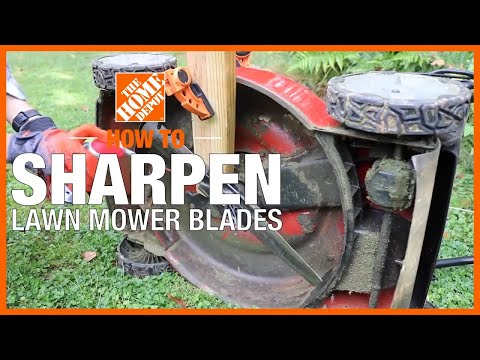
Reading about blade sharpening is one thing — seeing the angle, the motion, and the balance check happen in real time is what makes it click. Before you grab a wrench, take five minutes to watch a pro demonstrate the technique from start to finish.
The Tools You Actually Need (No Fancy Gear Required)
Here's the truth that the hardware store guy won't tell you: you don't need a $300 specialty grinder to sharpen a mower blade properly. You need the basics — and a little patience.
Your Essential Sharpening Kit:
- Socket wrench (usually 15mm or 5/8")
- Sturdy bench vise — the unsung hero of every garage
- 10-inch mill bastard file OR an angle grinder with a flap disc
- Wire brush for cleaning gunked-up edges
- Heavy work gloves — non-negotiable
- Safety glasses — also non-negotiable
- Blade balancer (or a nail in the wall, more on this magic trick below)
- Permanent marker to track blade orientation
The Step-by-Step Process That Never Fails
Step 1: Disconnect the Spark Plug. Always. No Exceptions.
This is the rule you cannot, must not, will not skip. Pull the spark plug wire before you touch anything else. A mower that fires up while your hands are near the blade is a trip to the ER you don't want to take.
Step 2: Tip the Mower Correctly
Tip your mower with the air filter and carburetor pointing UP. Tip it the wrong way and you'll flood the engine with oil — turning a 20-minute job into a smoky, sputtering disaster.
Step 3: Mark and Remove the Blade
Grab your permanent marker. Draw a clear arrow on the bottom of the blade pointing toward the direction it spins. This single mark prevents the most common rookie mistake: installing the blade upside down.
Wedge a block of wood between the blade and the deck to stop rotation. Then crank that bolt counterclockwise with steady, deliberate force.
Step 4: Clamp and Inspect
Lock the blade in your vise with the cutting edge facing up. Now look closely. Are there:
- Deep gouges or chips larger than 1/8 inch? You may need a new blade.
- Bent or warped sections? Replace it. Don't try to bend it back.
- Cracks anywhere? Replace immediately. A blade that fails at 3,000 RPM is a projectile.
Step 5: File or Grind the Edge
Here's where the magic happens. Follow the existing angle of the cutting edge — usually between 30 and 45 degrees. Don't reinvent it.
Critical Warning: You're aiming for butter-knife sharp, not razor sharp. A razor edge will chip and dull within a single mow. The factory edge exists for a reason — honor it.
If using a file, push in long, smooth strokes in ONE direction only. Lift on the return. Count your strokes — whatever you do on one side, match on the other.
If using an angle grinder, keep it moving. Linger too long in one spot and you'll overheat the steel, ruining its temper and turning your blade into expensive scrap.
Step 6: Balance the Blade (The Step Everyone Skips)
This is the most overlooked step in blade sharpening — and it's the difference between a mower that purrs and a mower that vibrates like a paint shaker.
Hammer a nail into a wall stud, leaving an inch sticking out. Hang the blade by its center hole. If one side dips, that side is heavier. File a touch more from the heavy side until the blade hangs perfectly horizontal.
Why Balance Matters: An unbalanced blade spinning at 3,000 RPM destroys spindle bearings in weeks. Replacing a spindle costs more than every blade you'll ever own. Balance is free insurance.
Step 7: Reinstall (Right Side Up!)
Remember that arrow you drew? Now's its moment. The cutting edges should face the direction of rotation. Torque the bolt firmly — not Hulk-tight, just confident-handyman tight.
The Mistakes That Will Cost You
The Five Cardinal Sins of Blade Sharpening:
- Sharpening to a razor edge — it will chip on first use
- Skipping the balance check — destroys bearings, voids warranties
- Overheating with the grinder — ruins steel temper permanently
- Installing upside down — mower won't cut, will scalp the lawn
- Forgetting the spark plug — we like you with all ten fingers
When to Replace Instead of Sharpen
Even the best-loved blade has a finish line. Here's how to know yours has crossed it:
| Warning Sign | What It Means |
|---|---|
| Cutting edge is less than 1/2 inch wide | Too thin to balance safely |
| Trailing edge (the wing) is worn flat | Loss of suction = poor cut quality |
| Multiple deep gouges or chips | Structural weakness, replace immediately |
| Visible cracks anywhere | Stop. Replace today. Non-negotiable. |
| Bent or warped profile | Cannot be safely straightened |
A quality replacement blade runs $15 to $35. A trip to the ER from a flying blade fragment runs considerably more. Make the right call.
The Pro Tips That Separate Amateurs From Experts
Insider Wisdom From 3 Seasons of Sharpening:
- Buy a backup blade. Swap, mow, sharpen at leisure. Zero downtime.
- Sharpen at the end of the season, not the start. Storage rust ruins a fresh edge.
- Mark your sharpening dates with a sharpie on the blade itself.
- Listen to your mower. A new vibration means an unbalanced blade. Check it.
- Clean the deck while the blade is off. Caked grass = airflow killer.
Your Lawn's Comeback Story Starts Right Now
A sharp blade is the single highest-leverage investment you can make in your lawn. Not fertilizer. Not a fancy spreader. Not the latest robotic mower. A sharp blade.
Twenty minutes of work. Tools you already own. Results you'll see the very next mow.
Your grass will stand taller. Your engine will run cooler. Your fuel will last longer. Your neighbors will wonder what you did differently. And you'll have the quiet satisfaction of knowing the answer is something almost no one ever bothers to do.
That's the magic of a sharp blade. Go make it happen.
Found this guide helpful? Bookmark it. Share it with the neighbor whose lawn looks like a goat got loose. Your future self — and your mower — will thank you.
Key Takeaways
- Choosing the right how to sharpen lawn mower blades means matching the key features to your specific needs and budget
- Read real customer reviews and check the return policy before you commit
- Also covers: lawn mower blade sharpening tools
- Also covers: sharpen mower blade with file
- Also covers: balance mower blade
- Compare value across models — the priciest option is not always the best fit


