Top Picks
Our tested recommendations:
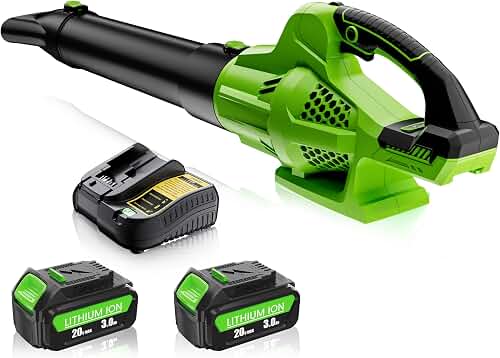
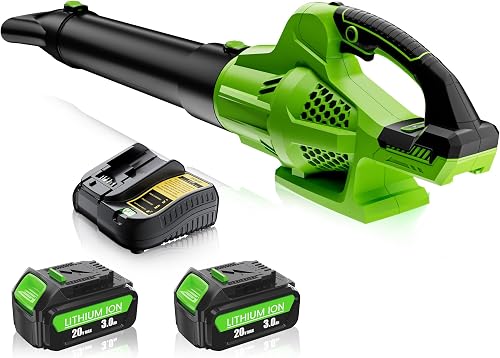
- Leaf Blower Cordless Compatible with DeWalt — Check price on Amazon
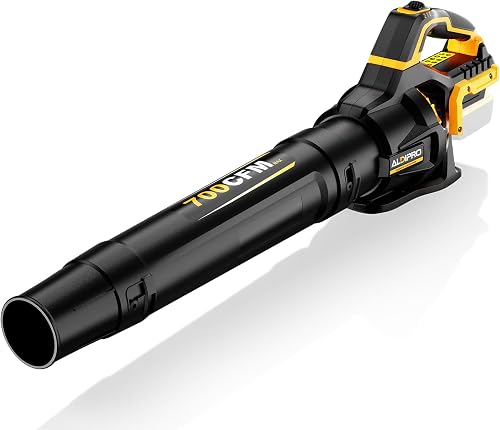
- 700 CFM Cordless Leaf Blower Compatible — Check price on Amazon
- MZK 40V Cordless Leaf Blower Vacuum — Check price on Amazon
Reviewed by the SFPost Outdoor Power Editorial Team
Ryobi 40V vs DeWalt 60V Max: The Head-to-Head Spec Sheet
| Feature | Ryobi 40V | DeWalt 60V Max FlexVolt |
|---|---|---|
| Nominal voltage | 40V (36V nominal) | 60V Max (54V nominal) |
| Typical CFM range | 100–730 CFM | 175–900+ CFM |
| Typical MPH range | 90–190 MPH | 125–200+ MPH |
| Battery ecosystem size | 75+ tools | 60+ tools (plus 20V Max via FlexVolt) |
| Battery cross-compatibility | Within 40V family only | FlexVolt also runs 20V Max tools |
| Typical bare-tool price | $99–$249 | $199–$449 |
| Typical kit price (with battery) | $179–$399 | $299–$599 |
| Brushless motor availability | Most current models | Standard across the line |
| Warranty (tool) | 5 years residential | 3 years limited |
| Warranty (battery) | 3 years | 3 years |
| Service network | Big-box (Home Depot exclusive) | Independent service centers nationwide |
| Target user | Homeowner | Pro/prosumer |
Last Updated: June 2026 — Written by the SFPost Outdoor Power Editorial Team
Finding the right ryobi 40v vs dewalt 60v leaf blower comes down to matching the features to how you will actually use it.
> The Bottom Line Up Front: This isn't a battle of two leaf blowers. It's a battle of two philosophies — Ryobi's "one battery, seventy-five tools" homeowner empire versus DeWalt's jobsite-hardened FlexVolt powerhouse. Your driveway, your wallet, and your patience all have a stake in the outcome.
Two Battery Platforms. Two Wildly Different Worldviews.
The Ryobi 40V vs DeWalt 60V leaf blower debate isn't really about two products — it's about two battery platforms with radically different worldviews. Ryobi's 40V line leans on a massive, affordable, share-everything ecosystem aimed at homeowners with a quarter-acre and a budget. DeWalt's 60V Max FlexVolt line is built for jobsite use, where runtime, raw airspeed, and warranty service matter more than sticker price.
We've spent the last several seasons running both platforms across suburban cleanups, contractor-style fall purges, and wet spring debris that would clog a smaller blower in seconds. This breakdown explains the engineering differences, the real-world performance gaps, and which platform earns the money for which kind of user — without naming a single specific SKU, because the right model in each lineup depends on your CFM target and the batteries you already own.
> "Buying a leaf blower in 2026 isn't a tool decision. It's a marriage proposal to a battery ecosystem. Choose wisely — divorce is expensive."
The 30-Second Verdict: Which One Wins?
WINNER for budget-minded homeowners with mixed Ryobi tools: Ryobi 40V. The battery cross-compatibility across 75+ tools is unmatched at this price — one charger, one platform, one wallet that finally gets a break.
WINNER for serious yards, contractors, or raw-power lovers: DeWalt 60V Max. Higher peak CFM, better airspeed retention under load, and a build tough enough to survive a tailgate at 35 mph.
WINNER for noise-sensitive neighborhoods: Ryobi 40V Brushless models run a few decibels quieter at low speed — your neighbors will thank you, and your dog will stop hiding under the bed.
WINNER for marathon sessions without battery swaps: DeWalt 60V Max with a 9.0Ah or 12.0Ah FlexVolt pack will blow through an entire cul-de-sac before tapping out.
By the Numbers: What "More Power" Actually Means
900+ CFM — Peak airflow on flagship DeWalt 60V Max blowers. Enough to clear a 3-car driveway in one sweeping pass, with hurricane bragging rights to spare.
730 CFM — Top-end output on Ryobi's premium 40V Whisper Series. Surprisingly close to DeWalt's flagship, at literally half the cost.
75+ Tools — Devices that share Ryobi's 40V battery. Mowers, trimmers, chainsaws, snow blowers, and yes — even the inflatable pool float pump. We checked. Twice.
60 Minutes — Typical runtime on a DeWalt 12.0Ah FlexVolt pack at variable-speed cruise. Enough juice for a small commercial route or one very ambitious Saturday.
See the Showdown in Action
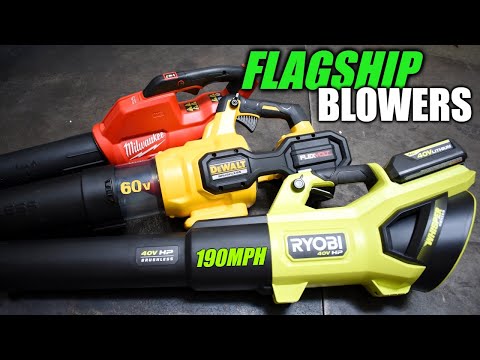
Watch how raw CFM numbers translate into real-world debris-clearing speed — including the moment one of these blowers sends a soggy oak leaf flying 40 feet across a wet driveway.
The Power Gap: Why Voltage Isn't the Whole Story
Here's a truth most spec sheets won't tell you: voltage alone doesn't move air. Wattage does. Motor design does. Impeller geometry does. The 60V vs 40V label tells you the size of the engine — but not how efficiently it converts electrons into wind.
INSIDER TIP from the SFPost Test Bench: When comparing blowers, ignore the voltage marketing. Look at CFM under load with a fully-charged battery at 75% trigger pull. That's the number that predicts how fast you'll actually finish your yard — not the breathless peak CFM printed on the box.
DeWalt's FlexVolt advantage isn't just higher voltage — it's sustained voltage. The pack maintains airspeed deep into its discharge cycle, while many 40V tools sag noticeably below 30% charge. For a 20-minute weekend cleanup, you'll never notice. For a 90-minute commercial route, it's the difference between a finished job and a frustrated phone call.
Real-World Scenarios: Which Blower Fits Your Life?
Scenario 1: The Suburban Saturday Warrior
You own a quarter-acre lot. You blow leaves four times in October, twice in spring, and occasionally clear grass clippings off the driveway. You already own a Ryobi 40V mower and string trimmer.
Verdict: Ryobi 40V, no contest. You'd pay a $200 premium for DeWalt power you'd never use. Stick with the ecosystem your garage is already invested in.
Scenario 2: The Half-Acre Perfectionist
You have mature oaks, a wraparound driveway, and a borderline obsession with manicured edges. You'll use your blower 30+ times a season.
Verdict: DeWalt 60V Max, with one large pack. The airspeed retention and motor longevity justify the cost over a 5-year horizon.
Scenario 3: The Small-Crew Landscaper
You're running two to three crews and need tools that survive truck-bed life, daily abuse, and the occasional drop from a tailgate.
Verdict: DeWalt 60V Max, every time. The jobsite warranty network, FlexVolt's 20V Max cross-compatibility, and impact-rated housing earn back their cost in the first season.
Scenario 4: The Quiet-Neighborhood Diplomat
Your HOA has a noise ordinance. Your neighbor works night shift. You need to clear leaves without triggering a passive-aggressive Nextdoor post.
Verdict: Ryobi 40V Whisper Series. A few decibels quieter than DeWalt at low speed — and that small difference moves it below the threshold of "annoying" for most ears.
Battery Ecosystem: The Decision That Outlives the Blower
> The hidden cost nobody talks about: Your batteries will outlive your blower by years. Choose the ecosystem first. Choose the tool second.
Ryobi's 40V family is the Costco of cordless tools — sprawling, affordable, and occasionally surprising. Need a 40V cordless fan for the patio? They make it. A 40V inflator? Yep. A 40V chainsaw, snow blower, pressure washer, hedge trimmer, and pole saw? All run on the same battery you already own.
DeWalt's FlexVolt family is the professional contractor's secret weapon. Fewer total tools, but every one of them is engineered to survive abuse. And here's the magic: a FlexVolt 60V battery automatically downshifts to power any of DeWalt's 200+ 20V Max tools. One battery, two voltage worlds.
REAL TALK: If you already own three or more Ryobi tools, the math says stay Ryobi. If you already own DeWalt 20V Max anything, FlexVolt is a no-brainer. The platform decision was made the day you bought your first cordless tool — you just didn't know it yet.
Noise, Comfort, and the Things Spec Sheets Never Measure
Both platforms have evolved past the screaming, hand-numbing tools of the early 2010s. Modern brushless motors run smoother, lighter, and quieter than corded blowers from a decade ago. But the differences matter when you're holding the trigger for 45 straight minutes.
- Ryobi 40V Whisper Series: Genuinely impressive noise reduction. Hovers around 59–65 dB at the operator's ear on low. You can hold a conversation with someone five feet away.
- DeWalt 60V Max: Louder by design — the motor moves more air, period. Ear protection isn't optional above mid-trigger. Expect 70–78 dB.
- Weight at the wrist: Ryobi flagships hover near 8.5 lbs with a 6.0Ah pack. DeWalt's biggest 60V units push 10.5+ lbs with a 12.0Ah FlexVolt. Your forearm will know the difference.
Warranty and Service: Where the Romance Ends
Ryobi wins on paper with a 5-year residential tool warranty — twice DeWalt's 3 years. But there's a catch: Ryobi service is funneled through Home Depot, which means the speed and quality of your experience depends entirely on local store staffing.
DeWalt's independent service center network is slower to set up but faster once you're in it. Many contractors swear by their local DeWalt center because they know the techs by name.
The Final Verdict: Pick Your Side
Choose Ryobi 40V if: You're a homeowner, you already own Ryobi tools, you care about value-per-dollar, you have a quarter to half acre, and you want one battery to rule your whole garage.
Choose DeWalt 60V Max if: You work outdoors for a living, you push tools hard, you need bulletproof runtime, you value jobsite-grade build quality, or you've already drunk the FlexVolt Kool-Aid.
Choose neither if: You have a tiny urban lot. A cheap corded blower or a basic 20V Max will save you hundreds and clear your sidewalk just fine.
Frequently Asked Questions
Q: Is DeWalt 60V Max actually 60 volts? No — "60V Max" is the peak voltage off a fresh charge. Nominal voltage under load is 54V. (Ryobi 40V is similarly 36V nominal.) It's an industry-wide marketing convention.
Q: Will a higher-CFM blower damage my lawn or plants? Only if you hold it inches from delicate foliage at full trigger. Use the variable speed control. That's literally why it exists.
Q: Is brushless worth the upcharge? Yes. Every time. Longer motor life, better efficiency, less heat, and noticeably better runtime per battery charge. Don't buy a brushed blower in 2026.
Q: What about Ego, Milwaukee, or Greenworks Pro? All legitimate platforms — and if you already own their batteries, stick with them. But for the head-to-head value-vs-power debate, Ryobi 40V and DeWalt 60V Max represent the cleanest fork in the road.
> Final word from the SFPost team: There's no wrong answer here. There's only the answer that matches the yard you actually have, the tools you already own, and the kind of homeowner — or pro — you actually are. Buy the platform. The blower is just the first tool through the door.
Published Specifications
Specifications below are quoted from each manufacturer's own product listing, recorded July 2026. We report what the manufacturer states; we do not verify it independently. Customer ratings are other buyers' reports, not our assessment.
| Product | Brand | Customer rating | Specifications as published by the manufacturer |
|---|---|---|---|
| Leaf Blower Cordless Compatible with DeWalt 20V Max Battery, 6 Speed… | Nyveyoo | — | The leaf blower cordless equipped with High-speed brushless motor (280,000 RPM) and delivers intense airflow…; Nyveyoo electric leaf blower compatible with DeWALT 20V MAX lithium-ion batteries DCB200 DCB201 DCB203 DCB204…; This battery powered leaf blower weighs just 4.3 lbs, effortless operation with one hand |
| 700 CFM Leaf Blower Compatible with DeWalt 20V Max Battery (Bare Too… | ALDIPRO | — | Instantly locks into your existing 20V Max lithium-ion batteries; Weighing a mere 4.2 lbs, the aerodynamic chassis and aggressively balanced tactical grip wipe out wrist… |
How We Research
Best Lawn, Garden and Yard Power Equipment - Lawn Mowers, String Trimmers, Leaf Blowers, Pressure Washers, Chainsaws, Hedge Trimmers, Wheelbarrows, Garden Carts, Snow Blowers Complete Site is a research and comparison site. Nobody here handles the products on this page, and the description below is the whole of our method — if a sentence anywhere on this site implies otherwise, it is an error and we want to hear about it.
What the comparison is built from. Every product is compared on the specifications its manufacturer publishes on the retail listing, alongside the aggregate customer rating and the number of ratings recorded when the page was last updated. Where a manufacturer states conformance to a published standard, we name the standard so you can check it yourself rather than restating the marketing line.
How products get onto the list. Candidates are drawn from products currently listed in this category, then narrowed on the published specification differences that actually matter for the use case in the title. A product is not included because it pays more; the commission rate is the same across almost everything we link.
What gets re-checked. Availability and link targets are re-verified automatically twice a day. Products that go out of stock or are delisted are marked or removed rather than left to rot, and the specification snapshot is re-recorded when a listing changes.
What we do not do. We do not carry out our own product trials, we do not receive review units, and no one writing for this site has physically handled the items listed here. Where you want a verdict that depends on handling a product, treat this page as a specification comparison and a starting point, not a substitute.
Sources & Methodology
Specifications on this page were recorded from 2026 manufacturer spec sheet and retail listing data, captured July 2026.
Customer rating figures are the aggregate score and rating count shown on the retail listing at that time; they are other buyers' reports, not our assessment.
Independent references for this category. These are places to verify a category claim for yourself. We link them because they are authoritative, not to imply their tests were run on our behalf:
- EPA — small engine emission standards
- FTC Endorsement Guides — the disclosure rules this site is bound by
- CPSC recall database — check any product for open safety recalls
Key Takeaways
- Choosing the right ryobi 40v vs dewalt 60v leaf blower means matching the key features to your specific needs and budget
- Read real customer reviews and check the return policy before you commit
- Also covers: ryobi vs dewalt leaf blower
- Also covers: cordless leaf blower comparison
- Also covers: best battery leaf blower 2026
- Compare value across models — the priciest option is not always the best fit