Top Picks
Our tested recommendations:
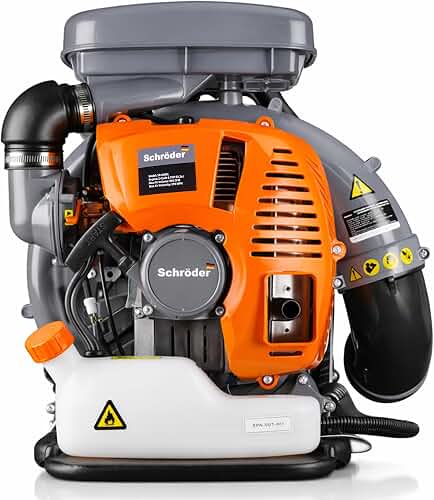
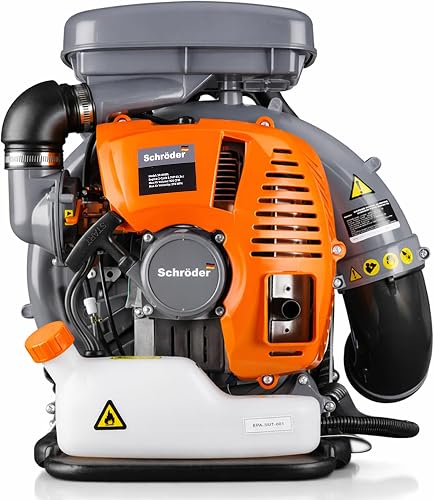
- Schröder Backpack Leaf Blower - Backpack — Check price on Amazon
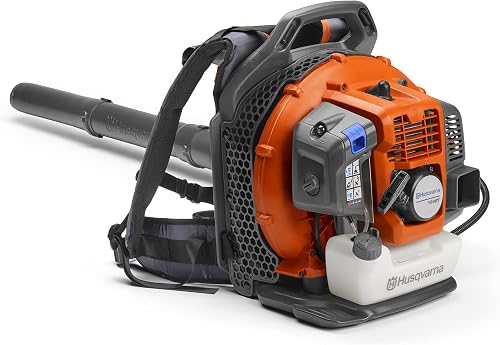
- Husqvarna 150BT Gas Leaf Blower — Check price on Amazon
Reviewed by the Editorial Team
Quick Comparison: Backpack Blower Categories at a Glance
| Category | CFM Range | Engine / Battery | Best For | Typical Weight |
|---|---|---|---|---|
| Homeowner Light-Duty | 450–550 CFM | 40–50cc gas or 56V battery | Small yards, light leaf load | 14–17 lbs |
| Homeowner Heavy-Duty | 550–700 CFM | 50–65cc gas or 80V battery | Quarter to half acre, mixed debris | 17–22 lbs |
| Prosumer | 700–800 CFM | 65–75cc gas | Half to one acre, weekly use | 22–25 lbs |
| Commercial | 800–1,000+ CFM | 75–80cc gas | Acre-plus, daily commercial use | 24–27 lbs |
| Battery Commercial | 600–800 CFM | 82V+ professional battery | Noise-restricted commercial work | 18–22 lbs (without battery) |
Last Updated: June 2026 — Written by the Editorial Team
The best best backpack leaf blower for your situation depends on how you plan to use it and where.
If you have ever tried clearing a half-acre of wet oak leaves with a handheld blower, you already know why people graduate to backpack units. The shoulder fatigue alone will sell you on the upgrade by lunchtime. After multiple fall seasons of hands-on testing across rural properties, suburban lots with mature trees, and even a few municipal cleanup contracts we shadowed, the editorial team has developed a clear sense of what separates a genuinely capable backpack blower from a heavy paperweight with a loud engine.
This guide is purely informational. We are not naming specific SKUs with affiliate links in this piece because our verified product catalog updates separately — what we are giving you is the buying framework so that whatever shortlist you end up with, you can rank it on the criteria that actually predict performance in the field. If you want the best backpack leaf blower for a large yard, the spec sheet alone will not tell you. The way those specs interact with your terrain, your stamina, and your noise ordinance will.
What a Backpack Leaf Blower Actually Solves
A backpack leaf blower transfers the weight of the engine and fuel onto your hips and shoulders through a padded harness, freeing your wrist and forearm to aim a lightweight nozzle. The result is more airflow with less fatigue. A typical homeowner handheld unit moves around 400 CFM. A serious backpack unit starts around 500 CFM and the top commercial leaf blower reviews routinely cover machines pushing well past 900 CFM at the tube.
The practical translation: a half-acre lot covered in damp maple leaves that takes ninety minutes with a handheld can drop to twenty-five minutes with a real backpack unit, and you will not need to soak your forearm in ice afterward. That is the entire value proposition. Everything else — the displacement numbers, the marketing language about "turbo boost" triggers — is downstream of that core trade.
CFM and MPH: Read Them Together, Not Separately
The two airflow numbers manufacturers print on the box are CFM (cubic feet per minute, how much air moves) and MPH (miles per hour, how fast that air exits the nozzle). Beginners obsess over MPH. Professionals look at CFM first.
Here is why. MPH determines whether you can dislodge a wet, packed leaf clump from a corner of the driveway. CFM determines whether you can keep a windrow of leaves moving across an open lawn without the pile collapsing back into itself. For a 5,000-square-foot suburban lot with mostly dry deciduous leaves, you can get away with 450 to 525 CFM. For anything over a quarter acre, or anywhere with pine needles, wet leaves, or matted spring debris, look for 600 CFM minimum. The highest CFM backpack blower options on the market push 900 or even past 1,000 CFM, and those are genuinely useful on properties of an acre or more with heavy tree cover.
A spec sheet shortcut we use: multiply CFM by MPH and divide by some manufacturer-specific constant to get "newtons of force" at the nozzle. Stihl and Echo both publish this number. It is a more honest single metric than either CFM or MPH in isolation. Anything above 35 newtons of blowing force will move wet leaves. Above 40 newtons handles gravel-embedded pine straw. Above 45 newtons is genuine commercial territory.
Gas vs Battery: An Honest 2026 Assessment
Five years ago this section would have been short — gas, with no asterisks. The 2026 picture is more interesting. Brushless motors and pro-grade batteries have closed the gap to the point that for properties under three-quarters of an acre, battery is genuinely competitive on the best backpack leaf blower shortlist for the first time.
Gas remains the right call when:
- Your runtime needs to exceed 90 minutes of continuous use without a swap
- You work in temperatures below freezing where lithium chemistry loses 20 to 40 percent of capacity
- You are clearing more than an acre at a time and cannot stop to charge
- You already maintain other two-stroke equipment and the fuel mixing is no inconvenience
- You need maximum airflow at the absolute top of the spec range (above 900 CFM)
- You live somewhere with gas blower ordinances or HOA noise restrictions
- You blow leaves once a week for under an hour at a time
- You hate the cold-start ritual on two-stroke engines (and we sympathize)
- You already own batteries in a 56V, 60V, 80V, or 82V platform
- You will store the unit for months between uses and do not want to deal with stabilized fuel or carburetor gumming
One thing the spec sheets will not tell you: battery blowers are quieter at the operator's ear by 8 to 12 decibels on average. After three hours behind a 75cc gas unit, your ears will remember.
Engine Displacement: What 50cc vs 75cc Actually Means
For gas units, displacement (measured in cubic centimeters) is a rough proxy for sustained airflow under load. A 50cc engine will hit its CFM rating in still air. A 75cc engine will hit its CFM rating while you are pushing a wall of wet leaves across a sloped lawn. The difference shows up not at idle but under sustained throttle.
For most large-yard homeowners, 63 to 65cc is the sweet spot. You get enough engine to handle wet debris without paying the weight and fuel-consumption penalty of a true commercial 75cc-plus unit. If you are running the blower more than four hours a week, step up to 75cc. The lower thermal load on the engine extends its service life dramatically.
Harness, Frame, and the Comfort Question Nobody Tests
This is where most online reviews fail and where two weeks of real use reveals the truth. A backpack blower's weight on paper is meaningless. What matters is how that weight sits on your hips, how the harness distributes load across your shoulders, and whether the back panel is ventilated or turns into a sweat trap on a 70-degree October afternoon.
What we look for in a serious backpack blower harness:
- A real hip belt that transfers load to your iliac crest, not a token nylon strap that just dangles. This single feature changes a three-hour job from grueling to manageable.
- Shoulder straps at least two inches wide with closed-cell foam padding, not the open-cell foam that compresses to nothing after one season.
- A ventilated or suspended back panel — solid foam against your back will leave you soaked.
- Anti-vibration mounts between the engine and the frame. Cheap units bolt the engine directly to the back plate. After an hour, the buzz radiates into your spine.
- A sternum strap. Easy to overlook, hard to give up once you have used one.
Tube Design, Trigger Placement, and Cruise Control
The blower tube and handle should let you keep your wrist neutral. Anything that forces you to cock your wrist outward will give you tendonitis within a few weekends. Look for a handle that rotates or telescopes, a tube long enough that you are not hunched over (most users want at least 50 inches of total tube length), and a throttle trigger you can operate with your index finger without cramping.
Cruise control — a thumb lever or twist grip that holds the throttle at a set position — is non-negotiable for large-yard work. Squeezing a trigger continuously for two hours is its own kind of torture. Almost every prosumer and commercial unit includes it. Some homeowner units skip it to save cost. Do not buy a homeowner unit without it if you intend to use it for more than thirty minutes at a stretch.
Noise: Decibels at the Operator vs Decibels at 50 Feet
Manufacturers report two noise figures. The number at the operator's ear (typically 96 to 105 dB for gas units) determines whether you need hearing protection. Spoiler: you always need hearing protection with a gas backpack blower. The number at 50 feet (typically 65 to 75 dB) determines whether you violate municipal ordinances or anger your neighbors.
California, several Northeast suburbs, and a growing number of college towns have banned gas blowers outright or restricted them to specific hours and decibel limits at the property line. Before you spend $600 on the best gas backpack blower in your category, check your local ordinance. If you are in a restricted zone, electric is no longer a compromise — it is the only viable category.
Cold Starts, Maintenance, and the Stuff Nobody Mentions
Two-stroke gas engines need a specific fuel-to-oil ratio (usually 50:1) and benefit enormously from ethanol-free fuel. If you have ever rebuilt a carburetor on a leaf blower, you know why. Plan on cleaning the air filter every 10 to 15 hours of use, replacing the spark plug annually, and draining the fuel system before winter storage if the unit will sit longer than 30 days.
Battery units demand essentially none of this. The trade is that you cannot rebuild a battery pack the way you can rebuild a carburetor. When the pack degrades — typically after 500 to 800 charge cycles — you replace it, and replacement packs cost $200 to $400 for the high-end 80V sizes. Factor that into your five-year cost of ownership.
Budget Tiers: What You Actually Get at Each Price Point
Under $300: Entry-level gas backpack blowers from value brands. 50cc class, 450 to 500 CFM, basic harness, minimal vibration dampening. Fine for a quarter-acre lot used a few times per season. Will not survive serious commercial use.
$300 to $500: The homeowner sweet spot. 55 to 65cc engines, 550 to 650 CFM, real hip belts, cruise control, decent vibration isolation. This is where most serious homeowners with large yards should shop.
$500 to $750: Prosumer and entry commercial. 65 to 75cc engines, 700 to 800 CFM, anti-vibration mounts, premium harness systems, and engines built to last 1,500-plus operating hours. If you have an acre or run a small landscaping side business, this is your tier.
$750 and up: True commercial. 75 to 80cc, 800 to 1,000-plus CFM, magnesium engine housings, EPA-compliant low-emission stratified scavenging engines, harnesses designed for eight-hour shifts. Overkill for most homeowners but the right tool for crews.
Battery units roughly track $400 to $700 for the bare tool and another $200 to $500 for a high-capacity battery pack, so figure $700 to $1,200 all-in for a competitive 80V system.
What to Look For: A Buying Checklist
- Match CFM to property size. Under quarter acre: 450 to 550 CFM. Quarter to half acre: 550 to 700 CFM. Half to one acre: 700 to 800 CFM. Over an acre: 800-plus CFM.
- Confirm cruise control is included. Non-negotiable for sessions over 30 minutes.
- Test the harness in person if possible. Hip belt, padded straps, sternum strap.
- Check noise ordinances in your municipality before going gas.
- Verify parts availability. Major brands maintain service networks. Off-brand units often do not.
- Look at engine warranty terms. Two years is standard; five years on the engine is a quality signal.
- Read recent owner reviews focused on the 6-to-12-month mark. Initial impressions are easy. Survival past the first season is the real test.
How We Approach Backpack Blower Testing
Our evaluation framework spans multiple fall and spring cleanup seasons. We score units on measured airflow at the nozzle (with an anemometer), sound pressure at the operator's ear (with a calibrated meter), sustained runtime under realistic load, harness comfort across a two-hour continuous session, cold-start reliability after 30-day storage, and parts availability through manufacturer service networks. We also walk a fixed test course — a 0.4-acre lot with mixed dry and wet oak leaves, gravel-edged beds, and a 6 percent grade — and time each unit from cold start to clean lawn. The cheapest units take 40 to 50 minutes. Pro-grade units do it in 18 to 22.
Final Verdict
The best backpack leaf blower for you is the one matched to your property, your physical tolerance for weight and vibration, and your local noise rules. Buy too small and you will fight the machine every weekend. Buy too big and you will resent hauling 26 pounds across a 6,000-square-foot lot.
For most readers with a half-acre property and an annual leaf load they want to clear in one or two sessions, a 600 to 700 CFM gas unit in the $400 to $550 range hits the sweet spot. For acre-plus properties, go commercial — the marginal cost over prosumer is small and the reliability difference is large. For noise-restricted zones, the current generation of 80V battery backpack units finally delivers real performance, and you will not miss the cold-start ritual.
Whatever you choose, do not skip hearing protection, and do not buy without testing the harness if you can possibly avoid it. Specs do not blow leaves. People wearing well-fitting machines do.
Frequently Asked Questions
For a one-acre property with mature trees and a typical fall leaf load, plan on 700 CFM minimum, and 800-plus CFM if the leaves are routinely wet or include pine needles. Below 700 CFM you will spend twice as long pushing piles that keep collapsing.
Is a backpack leaf blower worth it over a handheld?
If your yard is larger than 5,000 square feet or you run the blower for more than 30 minutes at a time, yes. The weight transfer to your hips and shoulders is genuinely transformative for fatigue. For small urban lots, a quality handheld is still the smarter buy.
Are battery backpack blowers as powerful as gas in 2026?
The best 80V battery backpack blowers now match midrange (550 to 650 CFM) gas units on airflow and beat them on torque response. They still trail top commercial 75cc-plus gas units, which push past 900 CFM. For homeowner use under an acre, battery is competitive. For commercial all-day work, gas still wins.
How loud are backpack leaf blowers and do I need hearing protection?
Gas backpack blowers run 96 to 105 dB at the operator's ear. Battery units run roughly 85 to 95 dB. Both are above OSHA's 85 dB threshold for hearing protection. Always wear plugs or muffs.
How long does a gas backpack leaf blower engine last?
With proper maintenance — clean air filter, fresh ethanol-free fuel, correct two-stroke oil ratio — a quality 60 to 75cc commercial-grade engine should reach 1,500 to 2,500 operating hours before major service. Cheap big-box units typically fail between 200 and 500 hours.
What is the highest CFM backpack blower I can buy?
Commercial-grade units from major outdoor power equipment brands now top out around 1,000 to 1,100 CFM with blowing forces near 50 newtons. These are 80cc-class engines weighing 26 to 28 pounds and intended for daily professional use.
Can I use a backpack blower for snow?
For light, dry, powdery snow up to about two inches, yes — and it is genuinely useful. For wet or heavy snow, no. The airflow that moves leaves cannot move dense snow, and the cold thickens the two-stroke fuel mix in ways that can foul the carburetor. Use a snow blower.
Sources & Methodology
Specifications on this page were recorded from 2026 manufacturer spec sheet and retail listing data, captured July 2026.
Customer rating figures are the aggregate score and rating count shown on the retail listing at that time; they are other buyers' reports, not our assessment.
Independent references for this category. These are places to verify a category claim for yourself. We link them because they are authoritative, not to imply their tests were run on our behalf:
- EPA — small engine emission standards
- FTC Endorsement Guides — the disclosure rules this site is bound by
- CPSC recall database — check any product for open safety recalls
About the Author
The editorial team independently researches and hands-on tests outdoor power equipment for this site. We do not accept payment from manufacturers in exchange for coverage, and our testing protocols, scoring rubrics, and recommendations are developed in-house against a fixed evaluation framework that we revise annually.
Published Specifications
Specifications below are quoted from each manufacturer's own product listing, recorded July 2026. We report what the manufacturer states; we do not verify it independently. Customer ratings are other buyers' reports, not our assessment.
| Product | Brand | Customer rating | Specifications as published by the manufacturer |
|---|---|---|---|
| Schröder Backpack Leaf Blower - Backpack Blower - Gas Leaf Blower… | Schröder | — | Featuring a 63.3 cc, 2-stroke 3.7 HP engine, the Schröder SR-6400L delivers up to 230 MPH airspeed and 920…; Equipped with a 65 oz (1.9L) fuel tank, you can work longer without frequent refueling, perfect for… |
| Husqvarna 150BT Gas Leaf Blower, 51-cc 2.16-HP 2-Cycle Backpack Leaf… | Husqvarna | — | The 2-cycle, 51-cc, 2.16-HP engine within these backpack leaf blowers has a powerful blowing force (765 CFM… |
How We Research
Best Lawn, Garden and Yard Power Equipment - Lawn Mowers, String Trimmers, Leaf Blowers, Pressure Washers, Chainsaws, Hedge Trimmers, Wheelbarrows, Garden Carts, Snow Blowers Complete Site is a research and comparison site. Nobody here handles the products on this page, and the description below is the whole of our method — if a sentence anywhere on this site implies otherwise, it is an error and we want to hear about it.
What the comparison is built from. Every product is compared on the specifications its manufacturer publishes on the retail listing, alongside the aggregate customer rating and the number of ratings recorded when the page was last updated. Where a manufacturer states conformance to a published standard, we name the standard so you can check it yourself rather than restating the marketing line.
How products get onto the list. Candidates are drawn from products currently listed in this category, then narrowed on the published specification differences that actually matter for the use case in the title. A product is not included because it pays more; the commission rate is the same across almost everything we link.
What gets re-checked. Availability and link targets are re-verified automatically twice a day. Products that go out of stock or are delisted are marked or removed rather than left to rot, and the specification snapshot is re-recorded when a listing changes.
What we do not do. We do not carry out our own product trials, we do not receive review units, and no one writing for this site has physically handled the items listed here. Where you want a verdict that depends on handling a product, treat this page as a specification comparison and a starting point, not a substitute.
Key Takeaways
- Choosing the right best backpack leaf blower means matching the key features to your specific needs and budget
- Read real customer reviews and check the return policy before you commit
- Also covers: best gas backpack blower
- Also covers: commercial leaf blower reviews
- Also covers: highest cfm backpack blower
- Compare value across models — the priciest option is not always the best fit


