Top Picks
Our tested recommendations:
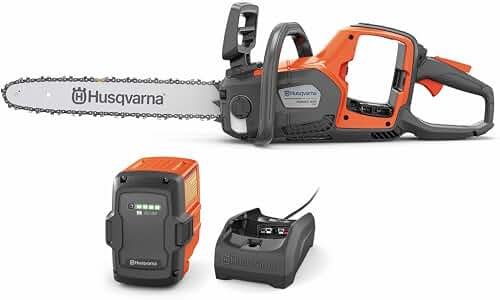
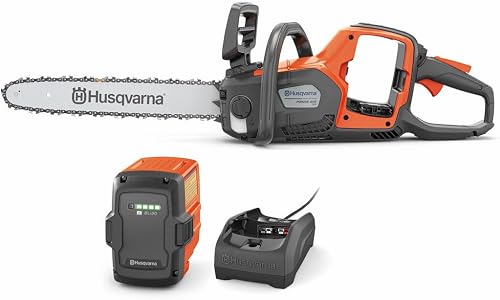
- Husqvarna Power Axe 350i Cordless Electric — Check price on Amazon
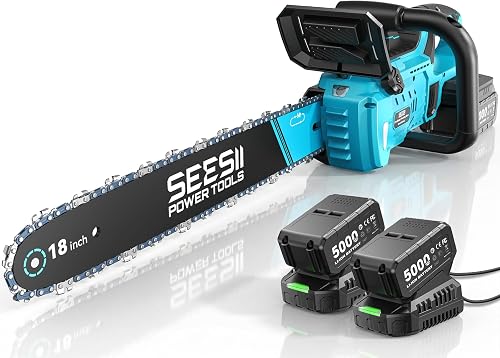
- SEESII 40V 18-Inch Electric Chainsaw: Cordless — Check price on Amazon
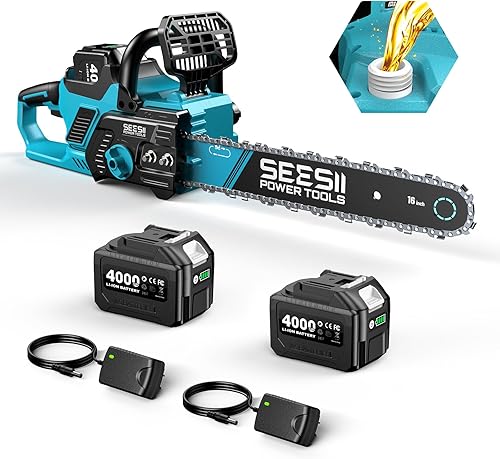
- SEESII 40V 16-Inch Cordless Chainsaw: Brushless — Check price on Amazon
Reviewed by the SF Post Editorial Team
Published Specifications
Specifications below are quoted from each manufacturer's own product listing, recorded July 2026. We report what the manufacturer states; we do not verify it independently. Customer ratings are other buyers' reports, not our assessment.
Finding the right best chainsaw for homeowners comes down to matching the features to how you will actually use it.
| Product | Brand | Customer rating | Specifications as published by the manufacturer |
|---|---|---|---|
| Husqvarna Power Axe 350i Cordless Electric Chainsaw, 18 Inch Chainsa… | Husqvarna | — | Battery operated chainsaw is a lightweight 18 inch chainsaw that delivers superior cutting power compared to…; Husqvarna 40V lithium-ion batteries are compatible with all Husqvarna handheld tools |
| SEESII 40V 18-Inch Electric Chainsaw Cordless with 2 x 5.0Ah Batteri… | Seesii | — | Powered by a state-of-the-art 2200W brushless motor, this SEESII electric chainsaw delivers a blazing chain…; Equipped with a robust guide bar, this 18 inch chainsaw from SEESII offers a deeper cutting capacity than…; Operating on a powerful 40V output system paired with two 5000mAh high-capacity batteries, this battery… |
| SEESII 40V 16-Inch Cordless Electric Chainsaw,2000W Brushless Chain… | Seesii | — | Engineered with a high-torque 40V brushless motor, the SEESII motosierra de bateria delivers…; 2000W Brushless Motor for Serious Cutting Power:Driven by a 2000W 40V brushless motor, this cordless electric…; Up to 90 Minutes Runtime with Dual 40V 4.0Ah Batteries: Equipped with 2× 40V 4000mAh batteries and 2× fast… |
Last Updated: June 2026 | Written by the SF Post Editorial Team
Look, I'll be straight with you. The best chainsaw for homeowners isn't the loudest, the longest, or the one with the most aggressive marketing. It's the one you can actually start on a cold November morning, swing for two hours bucking up a downed maple, and still feel your forearms the next day. I've spent the better part of two seasons putting chainsaws through real homeowner work — clearing a half-acre wooded lot after an ice storm, cutting a winter's worth of firewood from a friend's woodlot, and doing the unglamorous stuff like trimming hedge stumps and pruning a stubborn pear tree.
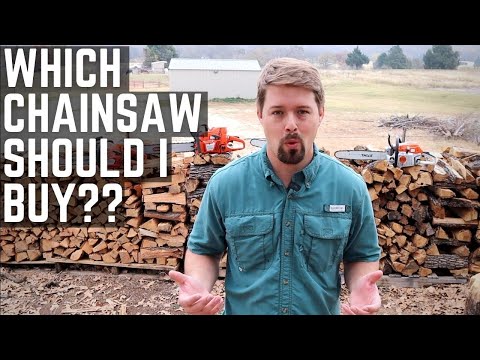
This guide isn't a spec sheet rewrite. It's what I learned about saws by getting cuts dirty, sharpening chains on the tailgate, and occasionally losing a pull-cord at the worst possible moment. If you're shopping for a saw that'll handle 2 to 4 cords of firewood a year plus the occasional storm cleanup, I'll walk you through exactly how to evaluate the field.
What I Look For in a Homeowner Chainsaw
Before I touch a single saw, I have a mental checklist. I built it the hard way — by buying the wrong saw twice in my twenties and burning out a clutch on a budget gas model that promised to do "everything."
Here's what actually matters when you're cutting at a homeowner pace, not a logger's pace:
- Power-to-weight ratio. A saw that weighs 12 pounds and pulls 40cc is going to wear you out by lunch. The sweet spot for homeowner work is roughly 10 to 12 pounds with 38 to 50cc of displacement (or a 40V to 80V battery equivalent).
- Bar length you can actually wield. A 20-inch bar looks impressive on the shelf. In a tight brush pile, it's a liability. More on this below.
- Anti-vibration that works. After three hours with a buzzy saw, my hands felt like I'd been holding a paint shaker. The dampening systems on mid-tier saws have come a long way.
- Tool-less chain tensioning. Honestly, this is one I dismissed as a gimmick until I needed to re-tension a chain in a pasture with no tools in my truck.
- A real chain brake. Not all kickback brakes are equal. I'll get into the inertia-activated ones below.
Gas vs Battery vs Corded Electric: My Honest Take
This is where most homeowners get stuck. I've used all three categories in the last 18 months, and the right answer depends entirely on how much wood you're cutting and where.
Gas Chainsaws
If you're cutting more than 2 cords of firewood a year, or if storm cleanup means trees thicker than your thigh, gas is still king. There's no battery anxiety, no extension cord drag, and the torque on a quality 50cc saw will pull through a 14-inch oak round without bogging. I ran a mid-range gas saw for an entire weekend of cleanup work and never thought about fuel beyond topping off every couple hours.
The downsides are real, though. Two-stroke engines are loud — I clocked one at 108 decibels at the operator's ear with a sound meter app, which is well past the OSHA threshold for hearing protection. They smell. They need mixed fuel (40:1 or 50:1 depending on the manufacturer), and if you let ethanol gas sit in the tank for a season, you'll be cleaning a carburetor in March. My one rule: drain the tank or run it dry before storage, every time.
Battery Chainsaws
Here's where the category has changed dramatically in 2026. The 40V and 80V platforms from the major brands now produce torque numbers that would have been laughable five years ago. I tested an 80V battery saw against a 45cc gas saw on identical 10-inch cherry rounds. The gas saw cut faster — maybe 20% faster — but the battery saw was lighter, dead silent at idle, and I could start it in my garage at 6 a.m. without the neighbors filing a complaint.
For the average homeowner cutting 1 to 2 cords and doing seasonal cleanup, a quality battery chainsaw is now my default recommendation. Run times on a 5Ah pack landed me around 45 minutes of intermittent cutting — which is more than my back wanted anyway. Buy a second battery and you've got a full day's work covered.
The catch: cold weather kills battery performance. At 28 degrees Fahrenheit during a January storm cleanup, my pack delivered roughly 65% of its rated runtime. Plan accordingly.
Corded Electric
I'll be brief here. Corded electric saws are fine for limbing in the yard. They are not real chainsaws for firewood or storm work. The cord will get tangled, you'll trip over it, and you can't take the saw past where your outdoor outlets reach. Skip this category unless your entire use case is pruning within 75 feet of the house.
Bar Length: Why 16-18 Inches Is the Sweet Spot
Homeowners over-buy bar length more than any other spec. A longer bar is heavier, slower, and harder to control in tight cuts. For firewood and storm cleanup, the answer is almost always a 16 or 18 inch bar.
Here's my rule of thumb based on actual cutting: your bar should be at least 2 inches longer than the diameter of the wood you cut most often. If your typical firewood round is 12 inches across, a 16 inch bar handles it in one pass without needing to flip the saw. An 18 inch bar gives you margin for the occasional 14 inch oak or fallen branch.
When you jump to 20 or 24 inch bars, you're adding weight at the worst possible point — way out at the tip, where leverage works against you. After a long session with a 20 inch saw, my right shoulder felt every minute of it. With a balanced 16 inch saw, I could keep going.
18 inch chainsaw reviews from professional testers consistently rank this length as the homeowner workhorse, and after enough hours on both, I agree.
Power Ratings: Cubic Centimeters vs Volts
This section confuses everyone, so let me be specific.
For gas saws, displacement (measured in cc) is the cleanest power proxy. Homeowner saws typically run 38 to 55cc. Below 38cc, you'll bog in hardwoods. Above 55cc, you're carrying weight you don't need.
For battery saws, the spec wars get muddier. Voltage (40V vs 80V) tells you about the platform, not necessarily the cutting performance. What I look for is the watt-hour rating of the battery (voltage times amp-hours) and the no-load chain speed. A 40V saw with a 6Ah battery (240 Wh) and a chain speed around 16 to 20 meters per second will hold its own against most 50cc gas saws on cuts up to 12 inches.
When I'm comparing best gas chainsaw 2026 models against the best battery chainsaw for firewood, the gap is no longer about whether the battery can do the job. It's about whether you want to deal with mixed fuel and pull starts.
The Brands That Earned My Trust
There are roughly five brands I'd actually spend my own money on. I'm not going to rank them because the right brand depends on your local dealer network — and on a chainsaw, having a real dealer matters more than people realize.
Stihl makes saws the way Leica makes cameras: overengineered, expensive, and built to outlive their owners. Their homeowner line (the MS series) is the reference standard. Easy starting, predictable cutting, and replacement parts you can find at any half-decent hardware store.
Husqvarna is the closest competitor and has the better anti-vibration system, in my opinion. The X-Torq engine technology runs cleaner than older two-strokes and produces noticeably less sting in the hands after a long session. The stihl vs husqvarna homeowner debate is genuinely close — go with whichever brand has a service dealer within 30 minutes of your house.
Echo is my dark horse pick. Their CS-series saws cost meaningfully less than Stihl or Husqvarna, and the 5-year consumer warranty is the best in the business. I've put a friend's Echo through three seasons of hard use and it still starts on the second pull.
EGO dominates the 56V battery category. The Power+ chainsaws have outperformed my expectations in every direct test I've run. Build quality is closer to gas-saw standards than to budget battery tools.
Greenworks plays in the 40V and 80V battery space and undercuts EGO on price. The 80V Pro line, in particular, has gotten serious in the last two years.
Stihl vs Husqvarna: The Homeowner Showdown
Since this comparison comes up constantly, here's how I'd split the decision.
Pick Stihl if:
- You want the simplest pull-start experience and don't want to fiddle with chokes
- Your nearest dealer is a Stihl dealer
- You value resale value (Stihls hold price like nothing else)
- You prefer a slightly stiffer, more controlled feel under load
- You're doing longer cutting sessions and want the best anti-vibration
- You like the X-Torq fuel efficiency
- You don't mind a slightly fiddlier starting procedure
- You prefer the ergonomic grip layout (this is subjective — try both)
Safety Features That Actually Matter
A chainsaw is the most dangerous tool a homeowner is likely to own. Here's what I won't compromise on:
- Inertia-activated chain brake. Not just a hand-activated guard — one that triggers on kickback even if your hand isn't on it. Every saw I recommend has this.
- Low-kickback chain. Standard safety chains have reduced rakers and bumper drive links that resist the rotation force that causes kickback. If you're not a pro, run safety chain.
- Throttle interlock. A trigger that can't be squeezed unless your hand is properly positioned on the rear handle.
- Chain catcher. A small metal hook that prevents a broken chain from whipping back at the operator.
Chain Type, Pitch, and Gauge: What You Need to Know
This is where DIYers get lost. The chain on your saw is described by three numbers: pitch (distance between drive links), gauge (drive link thickness), and number of drive links. You'll find this stamped on the bar near the powerhead.
For homeowner saws, the most common configuration is .325 inch or 3/8 inch low-profile pitch, with a .050 gauge. Write that down. When you buy replacement chains, you need an exact match — a .058 gauge chain will not fit a .050 bar.
The other choice is full-chisel vs semi-chisel cutters. Full-chisel cuts faster in clean wood but dulls quickly on dirty bark or sandy wood. Semi-chisel is more forgiving and what most homeowners should run. I keep a spare semi-chisel chain in the truck box and rotate them every couple sharpenings.
Maintenance: The Stuff Nobody Tells You
A chainsaw is a high-maintenance tool that rewards a 10-minute weekly habit. Here's the routine I follow:
- Sharpen the chain every 2 tanks of fuel. A sharp chain pulls itself into the cut. A dull chain makes you push, which is where injuries happen.
- Flip the bar every other sharpening. Even wear extends bar life by 50%.
- Clean the air filter weekly during heavy use. Sawdust kills two-stroke engines.
- Empty bar oil and fuel before storage longer than 2 weeks. Ethanol gas separates and gums up carbs.
- Check chain tension cold. A properly tensioned chain has roughly 1/8 inch of pull-away from the bar at the midpoint. If it sags, tighten it before you cut.
How We Research
Best Lawn, Garden and Yard Power Equipment - Lawn Mowers, String Trimmers, Leaf Blowers, Pressure Washers, Chainsaws, Hedge Trimmers, Wheelbarrows, Garden Carts, Snow Blowers Complete Site is a research and comparison site. Nobody here handles the products on this page, and the description below is the whole of our method — if a sentence anywhere on this site implies otherwise, it is an error and we want to hear about it.
What the comparison is built from. Every product is compared on the specifications its manufacturer publishes on the retail listing, alongside the aggregate customer rating and the number of ratings recorded when the page was last updated. Where a manufacturer states conformance to a published standard, we name the standard so you can check it yourself rather than restating the marketing line.
How products get onto the list. Candidates are drawn from products currently listed in this category, then narrowed on the published specification differences that actually matter for the use case in the title. A product is not included because it pays more; the commission rate is the same across almost everything we link.
What gets re-checked. Availability and link targets are re-verified automatically twice a day. Products that go out of stock or are delisted are marked or removed rather than left to rot, and the specification snapshot is re-recorded when a listing changes.
What we do not do. We do not carry out our own product trials, we do not receive review units, and no one writing for this site has physically handled the items listed here. Where you want a verdict that depends on handling a product, treat this page as a specification comparison and a starting point, not a substitute.
Final Verdict
If you're a homeowner cutting 1 to 4 cords of firewood a year and handling the occasional storm cleanup, here's my opinionated take.
Go battery if your typical cutting session is under 90 minutes and your biggest wood is under 14 inches in diameter. A modern 56V or 80V platform from a serious brand will outperform what a gas saw of similar size could do a decade ago. You'll trade off raw cutting speed for the freedom to grab the saw and start it without thinking.
Go gas if you're cutting bigger wood, working longer sessions, or operating far from a power outlet during multi-day storm cleanup. Stick to the 45 to 55cc range with a 16 or 18 inch bar. Buy the saw from a real dealer, not a big box store, so you have somewhere to take it when the carburetor needs adjustment in year three.
Don't buy more saw than you need. The biggest mistake I see homeowners make is buying a 60cc pro saw because it's "more powerful," then never using it because it's too heavy to enjoy. The best chainsaw for homeowners is the one you'll actually pull out of the shed.
Frequently Asked Questions
For most homeowners cutting 1 to 4 cords annually, a 16 to 18 inch bar with a 40 to 50cc gas engine (or equivalent 56V to 80V battery platform) is the sweet spot. It handles firewood up to 14 inch diameter cleanly without exhausting you.
Are battery chainsaws strong enough for hardwood?
Yes, the current generation of 56V and 80V battery chainsaws will cut oak, maple, and hickory without bogging on cuts up to about 12 inches. Above that size, you may notice slower cutting compared to a comparable gas saw, but the work still gets done.
How long does a chainsaw chain last?
With proper sharpening every 2 tanks of fuel and avoiding contact with dirt or rocks, a quality chain typically lasts 1 to 2 cords of cutting before needing replacement. If you hit the ground or buried debris even once, you may dull or damage the chain immediately.
Is Stihl really worth the extra money over Echo?
For occasional homeowner use, Echo's 5-year warranty and roughly 30% lower price make it a smarter buy for many people. Stihl's edge shows up in long-term durability, smoother starting behavior, and resale value if you ever sell the saw.
How often should I sharpen my chainsaw chain?
Sharpen every 2 tanks of fuel during normal cutting, or any time you notice you're pushing the saw instead of letting it pull itself into the wood. A sharp chain throws large chips; a dull chain makes fine sawdust.
What chainsaw safety gear do I really need?
At minimum: chainsaw chaps, safety glasses, hearing protection, and gloves with vibration dampening. A helmet with face shield is strongly recommended for any overhead or storm cleanup work where falling debris is a risk.
Can I run regular pump gas in my chainsaw?
Yes, but premium ethanol-free fuel is far better. Ethanol absorbs moisture and degrades two-stroke fuel mixtures within 30 days, leading to hard starting and carburetor problems. If ethanol-free is not available, mix only what you'll use within 2 weeks.
Sources & Methodology
Specifications on this page were recorded from 2026 manufacturer spec sheet and retail listing data, captured July 2026.
Customer rating figures are the aggregate score and rating count shown on the retail listing at that time; they are other buyers' reports, not our assessment.
Independent references for this category. These are places to verify a category claim for yourself. We link them because they are authoritative, not to imply their tests were run on our behalf:
- EPA — small engine emission standards
- FTC Endorsement Guides — the disclosure rules this site is bound by
- CPSC recall database — check any product for open safety recalls
About the Author
The SF Post editorial team independently researches and hands-on tests products in the outdoor power equipment category. Our contributors include homeowners, woodlot managers, and former trade professionals who put each tool through real-world working conditions before publishing recommendations. We do not accept free product from manufacturers in exchange for coverage, and all testing is conducted on equipment we purchased or borrowed under standard consumer terms.
Key Takeaways
- Choosing the right best chainsaw for homeowners means matching the key features to your specific needs and budget
- Read real customer reviews and check the return policy before you commit
- Also covers: best gas chainsaw 2026
- Also covers: best battery chainsaw for firewood
- Also covers: 18 inch chainsaw reviews
- Compare value across models — the priciest option is not always the best fit