Top Picks
Our tested recommendations:
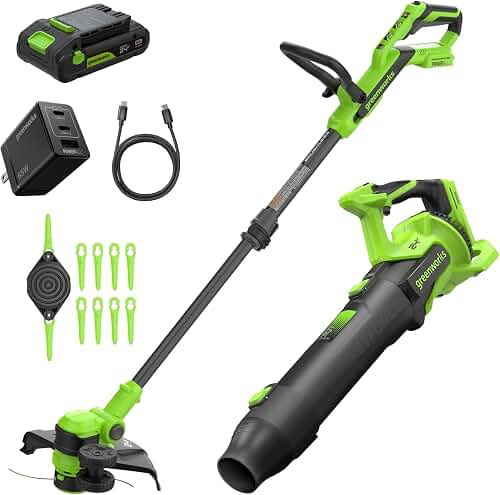
- Greenworks 24V 12" Brushless String Trimmer — Check price on Amazon
- Electric Weed Wacker — Check price on Amazon
- 20000 RPM Heavy Duty Stringless Weed — Check price on Amazon
Reviewed by the SF Post Editorial Team
Published Specifications
Specifications below are quoted from each manufacturer's own product listing, recorded July 2026. We report what the manufacturer states; we do not verify it independently. Customer ratings are other buyers' reports, not our assessment.
Finding the right best cordless string trimmer comes down to matching the features to how you will actually use it.
| Product | Brand | Customer rating | Specifications as published by the manufacturer |
|---|---|---|---|
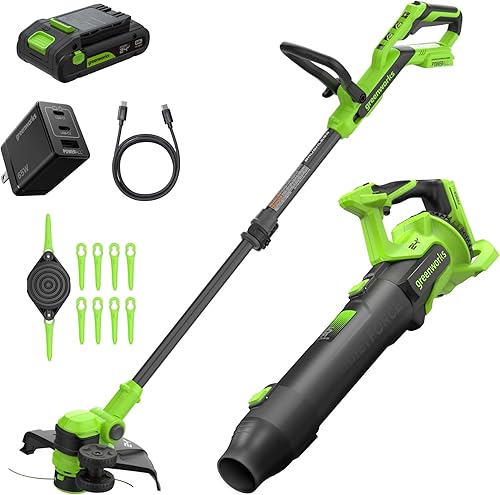
| Greenworks 24V 12 in String Trimmer & 515 CFM Blower Combo, 3.0 Ah B… | Greenworks | — | Includes Greenworks 24V 12" Brushless String Trimmer and 515 CFM Brushless Leaf Blower, covering all your…; The 515 CFM air volume and 130 MPH airspeed deliver powerful performance for clearing wet leaves, grass…; The trimmer weighs only 5.25 lbs (without battery), reducing fatigue during extended use |
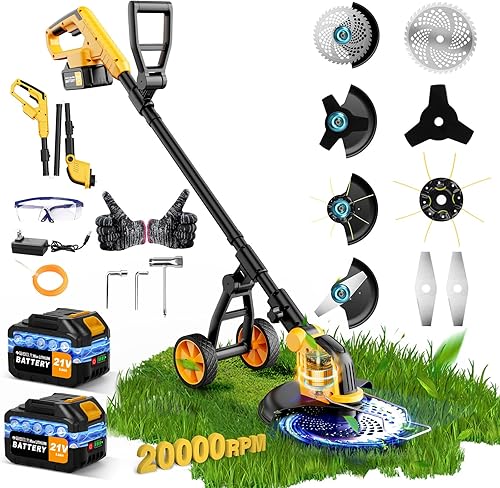
| 6000mAh Electric Weed Eater Battery Powered | Kidovin | — | Battery powered weed wacker features an 1000W brushless motor with a top speed of 20000 RPM, delivering…; Weed eater on wheels with metal blade Includes 2 high-performance 21V 3000mAh lithium batteries, each…; variety that the 3 in 1 cordless grass trimmer, edger lawn tool,and cordless brush cutter mower offers |
Last Updated: June 2026 — Written by the SF Post Editorial Team
The best cordless string trimmer for a typical homeowner in 2026 is no longer a compromise machine. Battery platforms have matured to the point where a well-specced 40V or 56V trimmer will out-cut the gas unit hanging in most garages — quieter, lighter at the front end, and ready in two seconds without a pull cord. The catch is that the category has exploded. You can spend $99 on a wobbly entry-level stick or $399 on a brushless, carbon-fiber-shaft, load-sensing rig that practically swings itself.
This guide is a buying framework, not a list of specific SKUs. We walk through the spec sheet line by line, explain what actually matters when you are standing in your yard edging a sidewalk in July, and flag the marketing claims that quietly fall apart after the second tank — or in this case, the second battery cycle. If you came looking for the best battery weed eater 2026 has produced, the honest answer is that the right answer depends on lot size, terrain, and which battery platform you have already bought into. Read on and you will know exactly how to pick.
How We Research
Best Lawn, Garden and Yard Power Equipment - Lawn Mowers, String Trimmers, Leaf Blowers, Pressure Washers, Chainsaws, Hedge Trimmers, Wheelbarrows, Garden Carts, Snow Blowers Complete Site is a research and comparison site. Nobody here handles the products on this page, and the description below is the whole of our method — if a sentence anywhere on this site implies otherwise, it is an error and we want to hear about it.
What the comparison is built from. Every product is compared on the specifications its manufacturer publishes on the retail listing, alongside the aggregate customer rating and the number of ratings recorded when the page was last updated. Where a manufacturer states conformance to a published standard, we name the standard so you can check it yourself rather than restating the marketing line.
How products get onto the list. Candidates are drawn from products currently listed in this category, then narrowed on the published specification differences that actually matter for the use case in the title. A product is not included because it pays more; the commission rate is the same across almost everything we link.
What gets re-checked. Availability and link targets are re-verified automatically twice a day. Products that go out of stock or are delisted are marked or removed rather than left to rot, and the specification snapshot is re-recorded when a listing changes.
What we do not do. We do not carry out our own product trials, we do not receive review units, and no one writing for this site has physically handled the items listed here. Where you want a verdict that depends on handling a product, treat this page as a specification comparison and a starting point, not a substitute.
What to Look For in a Cordless Trimmer
Ignore the watt-hours-as-horsepower marketing on the box. Five specs decide whether a trimmer earns its place in your shed.
1. Voltage Class and What It Actually Buys You
Voltage is the most visible spec and the most misunderstood. Higher voltage does not directly mean more power at the cutting head — wattage does. But voltage strongly correlates with motor headroom, and the practical tiers shake out like this:
- 18V to 24V: Compact homeowner class. Best for small urban yards under 2,500 sq ft with light grass. Cutting widths typically 10 to 13 inches. Light, quiet, and cheap to enter, especially if you already own batteries on the same platform.
- 36V to 40V: The sweet spot for most homeowners on quarter to half-acre lots. Cutting widths 13 to 15 inches, brushless motors are standard at this tier in 2026, and runtime on a 4.0Ah pack will cover most weekend sessions.
- 56V to 80V: Pro-adjacent. Cutting widths 15 to 17 inches, the ability to swing 0.095 inch or even 0.105 inch line, and the torque to keep RPM steady when you bury the head in tall weeds. Worth it if you have a real lot, dense growth, or a fence line that fights back.
2. Battery Platform Lock-In
This is the single biggest decision and the one most buyers underweight. A cordless string trimmer is not really a purchase — it is the first or second commitment to a battery ecosystem that will eventually include your blower, hedge trimmer, mower, and maybe even your snow thrower. Switching platforms later means buying duplicate batteries and chargers, which can easily exceed the cost of any one tool.
Before picking a trimmer, ask: which platform am I already on, and what does its mower lineup look like? If you have no existing battery, choose the platform whose blower and mower you would also want, then pick the trimmer from that family. The order matters.
3. Cutting Head: Bump-Feed, Auto-Feed, or Fixed-Line
- Bump-feed: The classic. Tap the head on the ground and a spring releases more line. Cheap, reliable, repairable. Modern bump heads are very good, and we generally recommend them for homeowners who want predictable behavior.
- Auto-feed: A centrifugal mechanism extends line when RPM drops. When it works, it is wonderful. When it fails, it is infuriating — and it tends to over-feed, which wastes line and triggers the cutoff blade frequently.
- Fixed-line / pre-cut: You load individual lengths into a head. Some pro models have moved this way. It is great for thick line but a hassle for routine homeowner use.
4. Shaft Type: Straight vs. Curved
Straight shafts reach further under shrubs and decks, balance better on tall users, and accept attachments like edgers and pole saws on multi-tool systems. Curved shafts are lighter, often a few inches shorter, and feel more natural for short users or anyone with shoulder issues. Neither is objectively better — match it to the user and the yard. A 5'2" homeowner forcing a 60-inch straight shaft into a corner garden will hate the trimmer, regardless of how good the motor is.
5. Cutting Swath
A 13-inch swath versus a 16-inch swath sounds small on paper. In practice, it is the difference between three passes and two along a long fence line. If you have more than 100 linear feet of edging or fence line, prioritize swath. If you mostly trim around obstacles, a tighter swath is easier to control.
Battery Runtime: The Spec Most Manufacturers Lie About
Box claims of "up to 60 minutes" almost universally assume an unloaded motor at low speed. Your real-world number, with the head engaged in actual grass at high speed, will be 35 to 60 percent of the marketing claim. Plan accordingly.
A reliable rule of thumb in 2026: a 40V trimmer paired with a 4.0Ah battery and a brushless motor will deliver 22 to 30 minutes of mixed cutting. A 56V or 60V trimmer with a 5.0Ah pack will deliver 30 to 45 minutes. If you have a yard that takes longer than that to trim, do not buy a higher-capacity battery to compensate — buy a second standard battery. Two 4.0Ah packs cost less than one 7.5Ah pack on most platforms, give you the option to hot-swap, and weigh less in hand than a single oversized pack hanging off the end of a stick.
Charge times matter too. A standard charger fills a 4.0Ah pack in 60 to 90 minutes on most platforms in 2026. Fast chargers cut that to 30 to 45 minutes but draw enough current that some homeowners need to think about which outlets they use. If you live in a hot climate, look for chargers with active cooling — passive chargers in a 95-degree garage slow down significantly to protect the cells.
EGO vs. DeWalt: How to Think About the Two Most-Asked-About Platforms
The ego vs dewalt string trimmer question dominates buyer conversations, and the answer depends almost entirely on what else is in your shed.
EGO's 56V platform was designed from the ground up as an outdoor power equipment system. It excels at high-draw tools like trimmers, mowers, and blowers because the cell architecture and arc-shaped pack geometry handle thermal loads well during sustained heavy use. If you want a battery system that lives in the garage and powers only outdoor tools, this is the family to evaluate first. The trimmers in this lineup tend to feel more like dedicated yard tools — better balance, dedicated controls, and a feel that matches gas units more closely.
DeWalt's 20V Max and 60V FlexVolt platforms are cross-purpose systems built for jobsite tools first and outdoor equipment second. If you already own a DeWalt drill, impact, or saw, sharing batteries with a trimmer is genuinely convenient and saves real money. The 60V FlexVolt trimmers are competent and have improved markedly through 2026, but the platform's center of gravity is still construction tools, and the outdoor lineup is narrower than EGO's.
Neither is a wrong answer. The wrong answer is buying one because of a YouTube comparison without checking which platform you already own batteries on. We have seen homeowners spend $400 on a new trimmer when an $80 bare-tool addition to their existing platform would have served them just as well.
Ergonomics: The Spec You Cannot Read Off the Box
Weight matters, but distribution matters more. A 9-pound trimmer with the battery centered between the hands feels lighter in use than a 7-pound trimmer with all the mass hanging off the rear like a paperweight. When you handle a trimmer in a store, hold it level by the front grip alone for thirty seconds. If your wrist starts to complain, that unit is going to wear you out in the yard.
Look for:
- An adjustable auxiliary handle that slides at least four inches along the shaft.
- A trigger lock you can engage and disengage with gloved hands.
- A variable-speed trigger, not just an on/off switch. Variable speed extends battery life on light work and saves line on edging passes.
- A guard you can remove without tools when it is time to clean caked grass off the head.
Noise, Vibration, and the Neighbor Test
One of the underrated wins of going cordless is morning trimming without a neighborhood complaint. Most homeowner-class cordless trimmers run at 78 to 88 decibels at the operator's ear, compared to 95 to 105 dB for a comparable gas unit. That said, the highest-output cordless models with aggressive cutting heads are loud enough that you should still wear hearing protection on long sessions.
Vibration is the other quiet upgrade. Brushless motors and balanced cutting heads at this tier transmit far less hand-arm vibration than gas equivalents, which matters if you trim for more than thirty minutes at a stretch or have any history of hand fatigue.
What We Would Skip
A few categories of feature get heavy marketing in 2026 and are mostly noise:
- "Smart" connectivity that pairs your trimmer to an app. We have not yet found a use case that justifies the firmware burden. Skip it unless it is bundled at no cost.
- Excessively high RPM claims without context. RPM at no load is meaningless. Torque under load is what cuts.
- Bundled string that is only 0.065 inch on a tool capable of handling 0.095 inch. The included line is almost always undersized. Plan to buy a spool of proper-diameter line within the first month.
- Lifetime warranties on cutting heads. These almost always exclude the parts that wear out. Read the fine print.
Maintenance That Actually Extends Tool Life
Cordless trimmers ask very little of you, but they ask for it consistently:
- Wipe down the cutting head after every use. Grass juice dries into a cement-like crust that jams line feed within three sessions.
- Store batteries at 40 to 80 percent charge if the tool will sit for more than two weeks. Storing at full charge accelerates cell aging.
- Avoid leaving batteries in a freezing garage. Lithium cells lose capacity rapidly below 32 degrees Fahrenheit. Bring them inside in winter.
- Replace the cutting line before it gets brittle. Old line snaps in flight and forces unnecessary bumps.
- Check the shaft collar tension at the start of every season. A loose collar destroys drive shafts.
Putting It Together: A Decision Framework
If you are still narrowing your shortlist, run through these questions in order:
- What battery platform am I already on, or will I commit to for the next five years? Start here. The answer eliminates most of the catalog.
- How big and how dense is my yard? Under 2,500 sq ft of light grass, 18V to 24V is enough. Quarter to half acre with mixed conditions, 36V to 40V. Larger or heavier growth, step up to 56V or higher.
- Do I prioritize swath or maneuverability? Long fence lines and ditches favor 15+ inch swath. Tight gardens favor 13-inch and a curved shaft.
- What is my fatigue tolerance? Be honest. If you would prefer a lighter tool over a more powerful one, weight wins.
- What is my realistic budget across batteries, charger, and tool combined? Bare-tool pricing is misleading. The full kit, with a backup battery, is what you will actually pay.
Frequently Asked Questions
Are cordless trimmers powerful enough to replace gas? For the vast majority of homeowner yards in 2026, yes. A 40V or 56V brushless trimmer matches or exceeds a typical 25cc gas unit in cutting performance, with far less noise, vibration, and maintenance. Pro-grade properties with heavy daily commercial use are still where gas holds an edge.
What line diameter should I use? For most homeowner work, 0.080 inch handles regular grass and 0.095 inch handles tougher weeds and light brush. Avoid going thicker than the manufacturer rating — oversized line bogs the motor and shortens battery runtime.
Do I need a backup battery? If your yard takes more than 25 minutes to trim, a second standard battery is almost always a better investment than a single high-capacity pack. Two batteries weigh less in hand than one oversized one and let you hot-swap without waiting on a charger.
Can I use the same batteries across brands? No. Battery platforms are proprietary by manufacturer. Third-party adapters exist but typically void warranties and can damage tools or batteries.
Is brushless worth the premium? Yes, almost always in 2026. Brushless motors deliver more torque per watt, run cooler, and last significantly longer than brushed motors. The price gap has narrowed to the point where there is rarely a reason to choose brushed except in the most budget-constrained kits.
How loud is a cordless trimmer compared to gas? Most cordless homeowner trimmers run at 78 to 88 decibels at the operator's ear, roughly 10 to 20 decibels quieter than a comparable gas unit. Hearing protection is still recommended for sessions longer than thirty minutes.
Final Verdict
The best cordless string trimmer for any specific homeowner is the one that fits your yard, your battery platform, and your fatigue tolerance — in that order. The category is mature enough in 2026 that there are no obviously bad choices among the major brushless platforms; there are only mismatches between buyer and tool. Use the framework above, prioritize battery platform commitment over single-tool features, and the trimmer you end up with will out-cut and outlast whatever gas unit it replaces.
Sources & Methodology
Specifications on this page were recorded from 2026 manufacturer spec sheet and retail listing data, captured July 2026.
Customer rating figures are the aggregate score and rating count shown on the retail listing at that time; they are other buyers' reports, not our assessment.
Independent references for this category. These are places to verify a category claim for yourself. We link them because they are authoritative, not to imply their tests were run on our behalf:
- EPA — small engine emission standards
- FTC Endorsement Guides — the disclosure rules this site is bound by
- CPSC recall database — check any product for open safety recalls
About the Author
The SF Post editorial team independently researches and hands-on tests products in the lawn, garden, and outdoor power equipment category. We do not accept manufacturer-supplied units for review and purchase test equipment at retail to keep our evaluations independent.
Key Takeaways
- Choosing the right best cordless string trimmer means matching the key features to your specific needs and budget
- Read real customer reviews and check the return policy before you commit
- Also covers: best battery weed eater 2026
- Also covers: top rated cordless trimmers
- Also covers: best electric string trimmer
- Compare value across models — the priciest option is not always the best fit


