The Numbers That Should Drive Your Decision
| The Stat | Why It Matters For You |
|---|---|
| 90% | Of homeowner cutting tasks handled by a single 16-inch bar |
| +2 inches | How much longer your bar should be than your largest log |
| 110+ dB | Gas saw noise at the operator's ear — louder than a rock concert |
| 35–40cc | Gas-saw power now matched by modern 40V/80V batteries |
| 14 lbs | The weight that turns brutal after 30 minutes of overhead limbing |
Reviewed by the Editorial Team
Last Updated: June 2026 | Written by the Editorial Team | Read Time: 9 minutes
> ### The 30-Second Answer > > Choosing the right chainsaw comes down to three non-negotiables: matching the bar length to the wood you actually cut, picking a power source that fits your property, and prioritizing the safety features that prevent the most common injuries. > > Nail those three and you'll own a saw for a decade. Miss them and you'll either fight every cut or shelf an expensive tool after one frustrating Saturday.
This guide walks through how to choose a chainsaw based on real-world use, not marketing specs. After running multiple saws through storm cleanup, firewood bucking, and limbing jobs over the past several seasons, here's what actually matters — straight from the woodlot. No fluff. No paid placements. Just hard-earned truth.
The Problem: Why Most Homeowners Buy the Wrong Chainsaw
Here's the uncomfortable truth: the chainsaw aisle is overwhelming because manufacturers sell you on horsepower and bar length — but those numbers only matter in context.
A 20-inch bar sounds impressive. It also sounds impressive until you're holding a 14-pound, snarling steel beast above shoulder height, trying to limb a fallen oak in 28-degree wind. I learned that the hard way during a December cleanup. My arms gave out before the brush pile did.
> ### Real Talk: The Three Faces of a Bad Chainsaw Purchase > > 1. Too heavy for the human holding it. > 2. Too underpowered for the wood being cut. > 3. Too dangerous for the experience level operating it. > > Every single one is avoidable with a 10-minute decision framework. Keep reading.
Step 1: Match Bar Length to Your Actual Cutting Tasks
Here's the golden rule pros live by — tattoo it on your forearm if you must:
> Your bar should be roughly 2 inches longer than the diameter of the largest log you'll regularly cut.
Cutting bigger wood? Possible — by making two passes from opposite sides. But doing that all day is exhausting and dramatically multiplies kickback risk. Translation: a sore back today, a hospital visit tomorrow.
The Definitive Chainsaw Bar Length Guide
| Bar Length | Best For | Typical User |
|---|---|---|
| 10"–12" | Pruning, small limbs, light yard work | Suburban homeowner with small trees |
| 14"–16" | Small firewood, storm cleanup, fence posts | Most homeowners — the sweet spot |
| 18"–20" | Larger firewood, occasional felling | Rural property owners, weekend woodcutters |
| 22"+ | Felling mature trees, milling lumber | Professionals, large-acreage owners |
> ### Pro Insight from the Field > > In my experience, the 16-inch bar handles roughly 90% of homeowner tasks. I bought a 20-inch saw five years ago thinking bigger was better — and I now reach for the 16-inch unit almost every time. > > Shorter bar = lighter saw = better control = less fatigue = safer cuts. It's the closest thing to a free lunch in this hobby.
Watch: Bar Length Selection in Action

Step 2: Choose Your Power Source (Gas vs Electric vs Battery)
The gas vs electric chainsaw debate isn't what it was a decade ago. Battery technology has genuinely caught up for most homeowner tasks — but not all of them. Let's break down all three honestly.
Option 1: Gas Chainsaws — The Heavy Hitters
Best For: Serious cutting, remote properties without easy power access, and anyone clearing acreage where extension cords and chargers are punchlines.
- Power: Unmatched torque for hardwoods, mature trees, and long bucking sessions.
- Runtime: As long as you have fuel — pour, pull, and keep going.
- The Trade-Offs: Loud (hearing protection mandatory), heavy, fuel mixing required, more maintenance, won't start when you need it most.
Option 2: Corded Electric — The Quiet Workhorse
Best For: Suburban homeowners doing light limbing, pruning, and small bucking within 100 feet of an outlet.
- Power: Surprisingly capable for soft and medium woods up to 8 inches.
- Runtime: Infinite — no fuel, no charging.
- The Trade-Offs: That cord. It snags, tangles, limits range, and lives in fear of your own chain.
Option 3: Battery-Powered — The Modern Default
Best For: 70% of homeowners reading this guide. Honestly. Modern 40V and 80V platforms have closed the gap with mid-tier gas saws on everything except marathon felling sessions.
- Power: Comparable to 35–40cc gas saws for cuts under 12 inches.
- Runtime: 30–60 minutes of active cutting per charge — more with a spare battery.
- The Trade-Offs: Battery cost adds up, cold weather drains them faster, charging eats into your work window.
Step 3: The Safety Features That Actually Save Fingers
More than 30,000 chainsaw injuries land in U.S. emergency rooms every year. The vast majority share two causes: kickback and operator fatigue. Both are largely engineerable away if you buy the right saw.
Non-Negotiable Safety Features
| Feature | Why It Matters |
|---|---|
| Chain Brake | Stops the chain in milliseconds during kickback — the single most important feature ever invented |
| Low-Kickback Chain | Reduced-aggression cutters that dramatically lower kickback risk |
| Anti-Vibration System | Saves your hands, wrists, and ability to type tomorrow morning |
| Throttle Lockout | Prevents accidental throttle activation while gripping |
| Hand Guard | Front shield that doubles as the chain brake trigger |
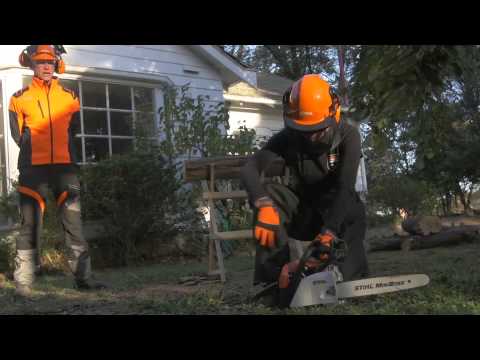
> ### The Safety Truth Nobody Tells You > > A chainsaw doesn't care how experienced you are. It cares whether you're paying attention this exact second. Buy the saw with every safety feature you can afford — then add chaps, a helmet with a face screen, gloves, and steel-toed boots. > > The gear costs less than one ER copay. Do the math.
Step 4: The Hidden Factors Nobody Talks About
Weight Distribution Matters More Than Total Weight
A well-balanced 12-pound saw feels lighter than a nose-heavy 10-pounder after 20 minutes. Hold it before you buy it. If you can't, read three reviews that mention all-day fatigue.
Chain Tension System
Tool-free tensioners save your knuckles and your patience. After your first roadside re-tension at dusk, you'll understand why this feature is worth every extra dollar.
Bar Oil Capacity
Look for an oil tank sized so it empties at roughly the same rate as the fuel tank. Run a dry bar for even 30 seconds and you're shopping for a new one.
Service & Parts Availability
That off-brand internet special is great — until the carburetor floods and nobody stocks the kit. Stihl, Husqvarna, Echo, and the major battery platforms (EGO, DeWalt, Greenworks, Milwaukee) all have parts pipelines that actually work.
The 10-Minute Chainsaw Decision Framework
Answer these five questions honestly and your saw practically picks itself:
- What's the largest log diameter I'll cut, realistically? Add 2 inches. That's your bar length.
- Do I have power access where I cut? Yes = battery or corded. No = gas.
- How many hours per session? Under 1 = battery wins. Over 2 = gas wins.
- Who else might use this saw? Lighter, simpler, safer features become priorities.
- What's my honest experience level? New users: prioritize safety features over raw power. Always.
Frequently Asked Questions
Q: Are battery chainsaws really as good as gas? For cuts under 12 inches and sessions under 60 minutes, modern 40V/80V saws are genuinely comparable. For all-day felling, gas still wins on runtime and sustained torque.
Q: What chainsaw safety gear is actually necessary? Non-negotiable: chaps, hearing protection, eye protection, and gloves. Strongly recommended: a forestry helmet with face screen, and steel-toed boots.
Q: How often should I sharpen the chain? After every tank of gas, or roughly every 60–90 minutes of battery use. A sharp chain is a safer chain — dull cutters force you to push, and pushing is when kickback strikes.
This guide is part of our complete homeowner power equipment series. Bookmark it, share it, and come back when it's time to upgrade.
Key Takeaways
- Choosing the right how to choose a chainsaw means matching the key features to your specific needs and budget
- Read real customer reviews and check the return policy before you commit
- Also covers: chainsaw bar length guide
- Also covers: gas vs electric chainsaw
- Also covers: chainsaw size for homeowner
- Compare value across models — the priciest option is not always the best fit