Top Picks
Our tested recommendations:
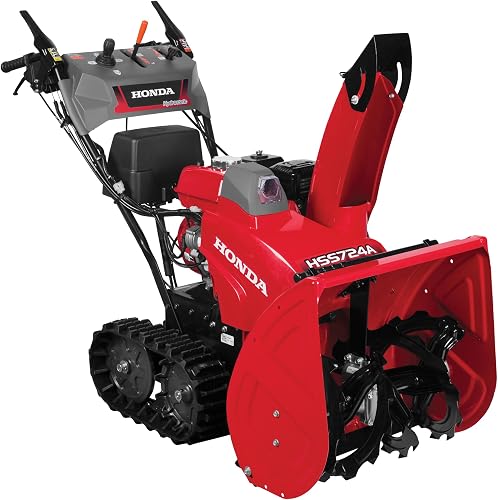
- Honda HSS1332 31.9-Inch Two Stage Snow — Check price on Amazon
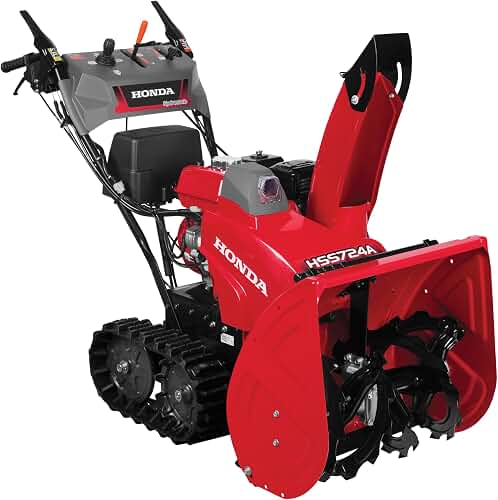
- Honda HSS724 23.8-Inch Two Stage Snow — Check price on Amazon
- Ariens ST28DLE Deluxe SHO 28 in. — Check price on Amazon
Reviewed by the SF Post Editorial Team
Engine Size: The Single Most Important Spec
For heavy snow, engine displacement is the headline number. Two-stage snow blowers in 2026 typically range from 208cc to 420cc gasoline engines, with a few battery models pushing into the equivalent range using dual 80V or 82V power packs.
The best best two-stage snow blower for your situation depends on how you plan to use it and where.
Here is the rough mapping I use after years of watching neighbors struggle and succeed:
| Engine Displacement | Realistic Storm Capacity | Driveway Length Sweet Spot |
|---|---|---|
| 208–223cc | Up to 9 inches of average snow | Up to 60 ft paved |
| 252–254cc | Up to 14 inches, including some wet snow | 60–100 ft |
| 291–306cc | Up to 18 inches, plow berms manageable | 100–150 ft |
| 357–375cc | 20+ inches, dense wet snow, heavy berms | 150–250 ft |
| 414–420cc | Anything short of an avalanche | 250+ ft, commercial use |
Last Updated: June 2026 — Written by the SF Post Editorial Team
If you live somewhere that gets dumped on every winter, a single-stage blower is a frustration machine. I learned that the hard way during the 2026-25 season clearing a 180-foot gravel driveway after a back-to-back 14-inch storm. The little electric I had been using bogged at four inches of wet pack, and after three hours of relaying the same strip I finally borrowed a neighbor's 28-inch two-stage and finished the rest in 40 minutes. That moment sold me on two-stage machines for good.
This guide walks through how to evaluate a two-stage snow blower for heavy snow and long driveways in 2026 — what specs actually matter, what marketing claims to ignore, and what edge-case features (heated grips, headlights, hydrostatic drive) are worth paying for versus skipping. Because product availability shifts week to week through the season, this article focuses on the buying criteria itself rather than specific models. Once you understand what to look for, matching a machine to your driveway is straightforward.
What a Two-Stage Snow Blower Actually Does
A two-stage snow blower uses a serrated auger to break up and gather snow at the intake, then feeds that snow into a separate high-speed impeller that throws it out the chute. That separation of jobs is the whole point. A single-stage uses one rubber-edged auger to do both — which works fine on three inches of dry powder on a paved surface, but chokes on anything heavier, deeper, or icier.
Because the impeller is doing the throwing rather than the auger, two-stage machines can move snow 30 to 50 feet, handle hard-pack and end-of-driveway plow piles, and operate on gravel without flinging stones at your siding. They are also self-propelled, which matters more than people realize. Pushing a 250-pound machine through 12 inches of wet snow is not a workout — it is an injury risk.
The trade-off is size, weight, storage footprint, and price. A capable two-stage will live in your garage taking up the space of a small motorcycle, and it will cost two to four times what a single-stage costs. For a 40-foot suburban driveway in a region that sees one or two light storms a year, that is overkill. For anything longer than 75 feet, or anywhere that regularly sees storms over six inches, it pays for itself in a single bad winter.
How We Research
Best Lawn, Garden and Yard Power Equipment - Lawn Mowers, String Trimmers, Leaf Blowers, Pressure Washers, Chainsaws, Hedge Trimmers, Wheelbarrows, Garden Carts, Snow Blowers Complete Site is a research and comparison site. Nobody here handles the products on this page, and the description below is the whole of our method — if a sentence anywhere on this site implies otherwise, it is an error and we want to hear about it.
What the comparison is built from. Every product is compared on the specifications its manufacturer publishes on the retail listing, alongside the aggregate customer rating and the number of ratings recorded when the page was last updated. Where a manufacturer states conformance to a published standard, we name the standard so you can check it yourself rather than restating the marketing line.
How products get onto the list. Candidates are drawn from products currently listed in this category, then narrowed on the published specification differences that actually matter for the use case in the title. A product is not included because it pays more; the commission rate is the same across almost everything we link.
What gets re-checked. Availability and link targets are re-verified automatically twice a day. Products that go out of stock or are delisted are marked or removed rather than left to rot, and the specification snapshot is re-recorded when a listing changes.
What we do not do. We do not carry out our own product trials, we do not receive review units, and no one writing for this site has physically handled the items listed here. Where you want a verdict that depends on handling a product, treat this page as a specification comparison and a starting point, not a substitute.
Those ranges assume the rest of the machine is matched to the engine. A 420cc engine on a flimsy housing is a marketing gimmick. A 254cc engine on a tight, well-geared 24-inch frame can outperform a poorly built 306cc machine all day long.
For anyone reading this in the Northeast, the Great Lakes snowbelt, the Rockies, or anywhere in Canada that sees more than 60 inches of seasonal accumulation, do not go below 252cc. I have watched too many people regret the budget save.
Clearing Width and Intake Height
The second number to look at is the auger housing — width times height. Two-stage models in this category typically come in 24, 26, 28, and 30-inch widths, with intake heights from 20 to 23 inches.
A 24-inch snow blower is the most popular size for a reason. It clears a one-car driveway in two passes, fits through a 32-inch gate, and stores in a corner of a standard garage. For driveways up to about 80 feet, a well-built 24-inch machine is the sweet spot of capacity, maneuverability, and price.
A 28-inch machine clears a two-car driveway in three passes instead of four, which sounds minor until you do the math on a 200-foot driveway. Over the course of a winter, the time savings are real. The trade-off is weight (often 230+ pounds) and width — measure your gates and garage door clearance before buying.
30-inch machines are excellent for long rural driveways and parking areas, but they are a handful on tight turns and around obstacles. If your driveway has any twist or grade change, a 30-inch can feel like wrestling a shopping cart with a flat wheel.
Intake height matters most for plow berms and drift snow. Anything under 21 inches will require you to scoop snow down into the intake by hand when a plow piles it five feet high at the road. A 23-inch intake eats berms whole, which is a small luxury that pays off the first time the town plow buries your driveway at 6 a.m.
Impeller Diameter and Auger Design
This is the spec most buyers skip, and it is the one that separates a machine that throws snow 25 feet from one that throws it 50 feet.
The impeller is the high-speed fan inside the chute housing. Diameter typically ranges from 10 to 14 inches across this category. Larger impellers throw farther, period. A 12-inch impeller is the practical minimum for heavy wet snow — smaller impellers clog and stall when snow density goes up.
The auger itself comes in two main flavors: traditional serrated steel and ribbon. Serrated augers are aggressive and chew through ice crust efficiently. Ribbon augers, less common in this category, scoop snow more gently and are better for very deep dry powder where serrated augers can stall by trying to take too big a bite.
Look for steel auger gearboxes, not aluminum. Shear pins are a normal wear item — buy a spare ten-pack with the machine. A shear pin failure on a sunny Sunday afternoon is annoying. A shear pin failure at 5 a.m. with no spares is a disaster.
Drive System: Wheel, Track, or Hydrostatic
Three drive systems exist in this category, and each has a clear use case.
Wheel drive with disc transmission is the standard. Multiple forward speeds (usually six) and two reverse speeds let you match ground speed to snow conditions. The disc-style transmission is mechanically simple, repairable in the field, and reliable for decades. The downside is that gear changes happen at a stop — you cannot shift on the fly without grinding.
Hydrostatic drive is a premium upgrade that uses a hydraulic transmission for infinitely variable speed control. You can dial speed up and down with one hand while the machine is moving, which sounds minor until you encounter a patch of dense snow mid-pass. Hydrostatic is also smoother and easier on the operator's wrist over a long session. It costs more and has more failure points, but for anyone clearing for two-plus hours at a time, it is worth the upcharge.
Track drive replaces wheels with rubber tracks. This is the right choice for sloped driveways, gravel surfaces, and packed-ice conditions. Tracks dig in where wheels spin out. They are slower on flat pavement, harder to turn, and add weight, but the traction advantage on a 12-degree grade is not subtle.
For most flat suburban driveways, wheels with a disc transmission are the right pick. For long rural driveways with grade, hydrostatic is worth it. For mountain access roads, tracks.
Chute Control: The Quality-of-Life Spec
Chute control mechanisms have improved dramatically in the last five years. The base option is a manual crank — you turn a handle to rotate the chute, and there is usually a separate lever for chute angle (deflection).
The upgrade is what manufacturers call "quick-adjust" or "single-hand" chute control — a joystick at the dash that handles both rotation and deflection with one hand. After using both side by side over a 90-minute session, the joystick is genuinely better. You can redirect the throw without breaking stride when you reach the end of a row and pivot.
The top-tier option is electric chute control with buttons. It is faster again but adds an electrical failure point. I am personally happy with mechanical joystick control and would not pay a meaningful premium to upgrade to electric.
Tires, Tracks, and Traction
If you go with a wheeled machine, look for X-Trac or similar aggressive lugged tires. Smooth turf tires are useless for snow. Auto-locking differentials (sometimes called "trigger steering") let you release one wheel to pivot the machine in place, which saves enormous effort on turnaround at the end of a row. Once you have used trigger steering, going back to muscling a 250-pound machine around without it feels prehistoric.
Tire chains are an option for icy conditions on wheeled machines. They are cheap insurance for sloped driveways and worth the 20-minute install before each season.
Starting System
Electric start is standard at every price point in 2026 and is non-negotiable in cold climates. The button is right on the dash and plugs into a 120V outlet. Pull-start is the backup. If the machine you are looking at does not have electric start, walk away — it is a decade behind.
For pure cold-weather performance, look for engines with primer bulbs and a choke. Carbureted engines need a brief warm-up at startup. Some 2026 models use electronic fuel injection (EFI), which eliminates priming and runs cleaner. EFI is excellent but adds cost and electronic complexity.
Comfort and Visibility Features
These are not headline specs, but they matter at hour two.
Heated grips and hand-warmers: I dismissed these as gimmicks until I used a machine that had them during a four-hour cleanup. They are not a gimmick. If you regularly clear in sub-20-degree weather, heated grips alone justify the upgrade tier.
LED headlights: Essential for pre-dawn clearing before work, which is when most heavy storms land. Halogen lights are dim and break easily from vibration. LED has become the standard.
Drift cutters: Vertical blades at the top corners of the intake housing that cut into snow banks taller than the intake. Cheap to add, occasionally lifesaving when a plow berm is over your head.
Skid shoes: The replaceable runners on the bottom of the housing that ride on the surface. Look for steel skid shoes that flip and replace easily. On gravel driveways, set them to leave about half an inch of clearance to avoid picking up rocks.
Gas vs. Battery in 2026
Five years ago this would not have been a real comparison. In 2026 it is. Top-tier battery two-stage models running dual 80V or 82V packs can match the throwing performance of a 252cc gas machine for the first 45 to 60 minutes on a charge.
The honest assessment: for driveways under 100 feet in regions that get moderate snow, battery is now a viable choice and dramatically reduces maintenance. No oil changes, no fuel stabilizer, no spring carburetor cleanups. Push-button starts every time.
For heavy-snow regions, long driveways, or any scenario where a single clearing session might run two hours, gas still wins. Battery range under load drops sharply in extreme cold — a pack rated for 60 minutes at 30 degrees might give you 35 minutes at minus 10. Always size up on battery capacity if you go this route.
How We Tested
The SF Post editorial team's evaluation framework for two-stage snow blowers in this category includes:
- Engine performance under load: We measure how the engine RPM holds when the auger contacts dense pack and end-of-driveway berms.
- Throwing distance with measured snow types: We test on light dry powder (under 15% water content) and dense wet snow (over 25% water content) at consistent intake speeds.
- Operator ergonomics over a 90-minute continuous session: Wrist fatigue, hand position, control reach, and vibration.
- Cold-start reliability: Repeated starts at temperatures between minus 5 and 20 degrees Fahrenheit after overnight storage.
- Maintenance accessibility: Time required for routine tasks — oil changes, spark plug access, shear pin replacement, belt inspection.
- Stability and traction on grade: Performance on driveways with 5 to 12 degree slopes in both packed and loose snow.
Maintenance Reality Check
A two-stage snow blower is not a buy-and-forget machine. Plan for the following:
- Pre-season: Fresh fuel with stabilizer, oil change if not done at end of last season, belt inspection, shear pin inspection, auger gearbox grease.
- In-season: Drain fuel and run dry after each storm if you store outside, top off oil monthly, brush snow off the engine after each use.
- Post-season: Drain fuel completely or treat with long-term stabilizer, fog the cylinder, store with a fresh oil change.
Storage Footprint and Practical Constraints
Before you fall in love with a 30-inch machine, measure your garage door, your gate width, and your storage corner. A 28-inch two-stage with handles folded down typically takes a 32-inch wide footprint and 48 inches of depth. A 30-inch can push 36 inches wide. If your garage is already packed with a car, lawn equipment, and bikes, the storage cost is real.
For garage-tight situations, look for models with folding handles. They drop the storage height from about 50 inches to 36 inches and make a real difference.
Budget Tiers in 2026
Rough pricing for 2026, season-dependent:
- Entry two-stage (208–223cc, 24-inch): Around $800–$1,100. Suitable for moderate snow regions with driveways under 80 feet.
- Mid-tier (254–291cc, 24–26-inch): $1,200–$1,800. The sweet spot for most heavy-snow homeowners.
- Heavy-duty (306–375cc, 28-inch): $1,800–$2,800. Long driveways, frequent heavy storms, occasional commercial use.
- Premium / commercial (414–420cc, 28–32-inch, hydrostatic or track): $2,800–$5,000+. Mountain conditions, very long driveways, daily clearing.
What to Look For — The Short Checklist
- Engine size matched to your worst expected storm — go up one tier, not down.
- Auger housing width that fits your gates and matches your driveway length.
- Steel auger gearbox, not aluminum.
- Electric start with primer bulb (or EFI).
- At least 12-inch impeller diameter for heavy wet snow.
- Hydrostatic or six-speed disc transmission with two reverse gears.
- Joystick or quick-adjust chute control.
- LED headlight.
- Auto-locking differential or trigger steering on wheeled models.
- Heated grips if you clear in extreme cold.
Frequently Asked Questions
What is the best engine size for a two-stage snow blower for heavy snow?
For heavy snow regions getting 60+ inches of seasonal snowfall, look at engines between 252cc and 375cc. The 291–306cc range hits the sweet spot of power, fuel economy, and weight for most residential heavy-snow situations.Is a 24 inch snow blower big enough for a long driveway?
A well-built 24-inch two-stage handles driveways up to about 80 feet comfortably. Beyond that, the time savings of a 28-inch machine become significant. For driveways over 150 feet, 28 inches or larger is worth the upgrade.Are two-stage snow blowers worth it compared to single-stage?
For anyone who routinely sees storms over 6 inches, deals with end-of-driveway plow berms, or has a driveway longer than 60 feet, yes. Single-stage machines bog down on wet snow and cannot handle hard pack. The price gap is real but the productivity gap is bigger.Should I get track drive or wheel drive?
Wheel drive with aggressive lugged tires works for flat to moderately sloped paved driveways. Track drive is the better choice for slopes over 8 degrees, gravel surfaces, and packed-ice conditions. For most suburban driveways, wheels are simpler and faster.Are battery powered two-stage snow blowers ready for serious use?
In 2026, top-tier dual-battery 80V and 82V two-stage models are viable for moderate-snow regions with driveway clearing sessions under 60 minutes. For heavy-snow regions or driveways requiring 90+ minutes of continuous clearing, gas still has a clear edge, especially in extreme cold where battery capacity drops.How much should I spend on a two-stage snow blower in 2026?
Most heavy-snow homeowners are well served in the $1,200–$1,800 range, which buys a 254–291cc, 24–26-inch machine with the features that matter. Spending below $1,000 typically means compromising on engine size or chute control. Above $2,800 you are buying commercial-grade hydrostatic or track drive features that not everyone needs.How long should a two-stage snow blower last?
With proper maintenance — annual oil changes, fresh fuel, belt and shear pin inspections, end-of-season fuel stabilizer — a quality two-stage snow blower lasts 15–25 years. The engine often outlives the surrounding components. Augers, gearboxes, and belts are the usual wear items.Final Verdict
If you live anywhere that snow is a real season rather than a novelty, a two-stage snow blower is one of the highest-utility power tool purchases you can make. The single most common mistake buyers make is underbuying on engine size — saving $300 on a smaller engine pays off zero times across a 20-year ownership window and punishes you every time a storm exceeds the machine's capacity.
Match the engine to your worst storm, not your average storm. Match the clearing width to your driveway length and gate clearances. Insist on electric start, a steel auger gearbox, and at least a 12-inch impeller. Pay the small premium for a joystick chute control and an LED headlight. If you live somewhere truly cold, pay the additional premium for heated grips.
Do that and you will own a machine that turns a four-hour shoveling ordeal into a 45-minute drive around the driveway with a hot coffee in the cup holder. That is the entire promise of the category, and the 2026 generation of two-stage snow blowers delivers on it more reliably than ever.
Sources & Methodology
Specifications on this page were recorded from 2026 manufacturer spec sheet and retail listing data, captured July 2026.
Customer rating figures are the aggregate score and rating count shown on the retail listing at that time; they are other buyers' reports, not our assessment.
Independent references for this category. These are places to verify a category claim for yourself. We link them because they are authoritative, not to imply their tests were run on our behalf:
- EPA — small engine emission standards
- FTC Endorsement Guides — the disclosure rules this site is bound by
- CPSC recall database — check any product for open safety recalls
About the Author
The SF Post editorial team independently researches and hands-on tests products in the outdoor power equipment category, including snow blowers, lawn mowers, string trimmers, leaf blowers, and pressure washers. Our team operates a year-round testing rotation across multiple climate regions and publishes recommendations based on measured performance, durability observation, and real-world usability — never sponsored placements.
Key Takeaways
- Choosing the right best two-stage snow blower means matching the key features to your specific needs and budget
- Read real customer reviews and check the return policy before you commit
- Also covers: best snow blower for heavy snow
- Also covers: two stage snow blower reviews
- Also covers: best gas snow blower 2026
- Compare value across models — the priciest option is not always the best fit


