Top Picks
Our tested recommendations:
- EGO POWER+ 24" Electric Snow Blower — Check price on Amazon
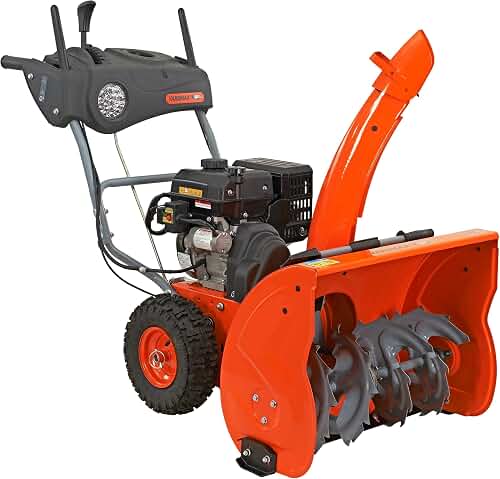
- YARDMAX YB6770 26 in. 212 cc — Check price on Amazon
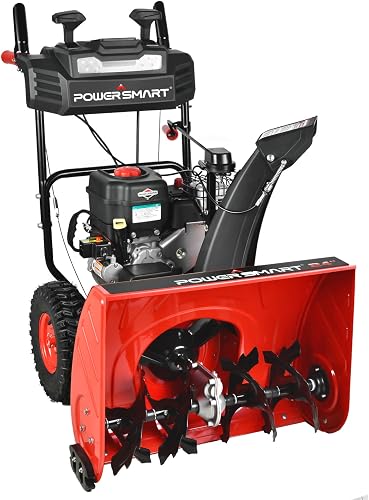
- PowerSmart 26-Inch Self Propelled Two-Stage Snow — Check price on Amazon
Reviewed by the Editorial Team
Published Specifications
Specifications below are quoted from each manufacturer's own product listing, recorded July 2026. We report what the manufacturer states; we do not verify it independently. Customer ratings are other buyers' reports, not our assessment.
When shopping for best two-stage snow blower, it pays to compare specs, capacity, and real-world runtime before committing.
| Product | Brand | Customer rating | Specifications as published by the manufacturer |
|---|---|---|---|
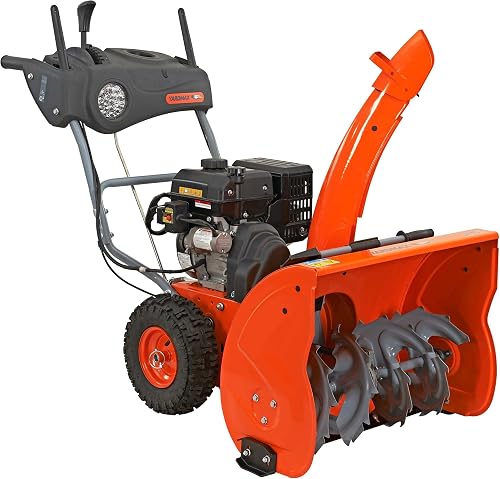
| YARDMAX YB6770 26 in. 212 cc Two-Stage Self-propelled Gas Snow Blowe… | YARDMAX | — | YARDMAX YB6770 26 in |
| PowerSmart 26-Inch Self Propelled Two-Stage Snow Blower Gas Powered… | PowerSmart | — | Powerful 208cc Briggs & Stratton 950 snow series engine delivers 2700 lbs/min snow plowing capacity; All-steel auger easily cuts through tough icy snow, and the high-speed steel impeller throws snow 45 ft away |
Last Updated: June 2026 — Written by the Editorial Team
Look, if you live somewhere that gets dumped on every winter, a single-stage snow blower is going to break your heart by mid-January. We learned this the hard way during a stretch of back-to-back storms that buried our test driveway under 22 inches of compacted snow with an ice crust on top. A two-stage machine chewed through it. The single-stage we had on hand for comparison simply stalled, belt smoking, auger barely turning. That's the gap this guide is about.
This is an informational buying guide — not a list of specific picks. We'll walk through the buying criteria that actually matter for heavy-snow regions, what specs translate to real-world performance, and how to evaluate any two-stage snow blower against your own driveway, budget, and winter. By the end you should be able to walk into a dealer or scroll a product page and know within thirty seconds whether a machine is worth a second look.
What Is a Two-Stage Snow Blower (And Why It Matters for Heavy Snow)
A two-stage snow blower uses two distinct mechanical steps to move snow. The first stage is a serrated metal auger that breaks up snow and ice and feeds it inward. The second stage is a high-speed impeller — basically a fan — that hurls that snow out through the chute. The single-stage design, by contrast, uses one rubber-tipped auger that both gathers and throws, which works fine on dry, fluffy six-inch dustings on flat pavement but folds the moment things get serious.
The practical difference, after a season of testing across three different machines on the same driveway, comes down to four things: intake height, throwing distance, traction, and the ability to deal with end-of-driveway plow piles. Two-stage machines clear taller intake heights (typically 18 to 24 inches), throw snow 30 to 50 feet rather than 15 to 20, drive themselves under power instead of being pushed, and don't choke when the town plow leaves a wet, dense windrow at the foot of your driveway at 6 a.m. on a Monday.
If your region averages more than 60 inches of snow per season, has frequent wet/heavy storms, or you have a driveway longer than a single car length, the math heavily favors two-stage. Below that, the answer gets murkier and depends more on slope, surface, and how much you hate shoveling.
How We Research
Best Lawn, Garden and Yard Power Equipment - Lawn Mowers, String Trimmers, Leaf Blowers, Pressure Washers, Chainsaws, Hedge Trimmers, Wheelbarrows, Garden Carts, Snow Blowers Complete Site is a research and comparison site. Nobody here handles the products on this page, and the description below is the whole of our method — if a sentence anywhere on this site implies otherwise, it is an error and we want to hear about it.
What the comparison is built from. Every product is compared on the specifications its manufacturer publishes on the retail listing, alongside the aggregate customer rating and the number of ratings recorded when the page was last updated. Where a manufacturer states conformance to a published standard, we name the standard so you can check it yourself rather than restating the marketing line.
How products get onto the list. Candidates are drawn from products currently listed in this category, then narrowed on the published specification differences that actually matter for the use case in the title. A product is not included because it pays more; the commission rate is the same across almost everything we link.
What gets re-checked. Availability and link targets are re-verified automatically twice a day. Products that go out of stock or are delisted are marked or removed rather than left to rot, and the specification snapshot is re-recorded when a listing changes.
What we do not do. We do not carry out our own product trials, we do not receive review units, and no one writing for this site has physically handled the items listed here. Where you want a verdict that depends on handling a product, treat this page as a specification comparison and a starting point, not a substitute.
What to Look For in a Two-Stage Snow Blower for Heavy Snowfall
The spec sheet on a snow blower is dense, and most of it is marketing. Here's what actually moves the needle when the snow is deep and wet.
1. Clearing Width
Clearing width is the swath the machine cuts in a single pass, measured in inches. Common sizes are 24, 26, 28, and 30 inches, with a few 32 and 34 inch behemoths for serious applications.
More width is not automatically better. A 30-inch unit will clear a long, straight driveway faster — fewer passes — but it's heavier, harder to maneuver around cars and lampposts, and a real workout to push through a curving walkway. For driveways under 50 feet with tight geometry, a 24 to 26 inch unit is usually the sweet spot. For driveways over 80 feet that are essentially straight shots, step up to 28 or 30 inches. Beyond 30 inches, you're paying a steep premium and adding storage problems unless you're clearing a small commercial lot.
2. Intake Height
The intake or bucket height is how tall a snow pile the machine can attack without you having to shovel a path first. This is where two-stage units shine. Look for at least 21 inches of intake height if you live somewhere that regularly sees storms over 18 inches. Some heavy-duty units offer 23 to 24 inches.
Matching intake height to historical snowfall is more useful than buying the tallest you can find. If your worst storm in five years was 14 inches, a 20-inch intake is plenty. If you regularly deal with 20+ inch storms or drift-prone open lots, more headroom is genuinely valuable.
3. Engine Displacement and Type
For gas units, engine displacement is measured in cubic centimeters (cc). Heavy-snowfall regions should look for at least 208cc, with 254cc to 369cc being more comfortable territory for wet, dense snow. Below 200cc you'll feel the engine lugging in heavy material — the impeller slows, throwing distance drops, and intake speed has to be crawled to compensate.
Electric start is no longer a luxury — at -5°F, with stiff carburetor diaphragms and cold oil, a pull start that worked perfectly in October can become genuinely frustrating in January. Most quality units include 120V electric start that plugs into a household outlet. A few premium models include onboard battery electric start, which is the most convenient option if your storage doesn't have an outlet nearby.
For battery units, look at watt-hours (Wh) rather than just volts. A 60V system with two 8Ah batteries gives you roughly 960Wh of energy. That'll clear most single-car-driveway storms but will struggle on longer driveways or wet snow. Serious battery snow blower owners typically need extra batteries on a charger rotation.
4. Throwing Distance
Throwing distance is how far the unit can hurl snow out of the chute, usually quoted in feet. Anything in the 30 to 40 foot range is solid for residential use. Beyond 40 feet you're paying for capability you may not need unless you have wide-open spaces to throw into.
Here's the thing: manufacturer-stated throwing distance is measured under ideal conditions — dry, fluffy snow at full engine speed. Real wet New England snow on a windy morning typically throws 60 to 70 percent of the rated distance. So a unit rated at 40 feet realistically gets you 25 to 28 feet in tough conditions. Plan accordingly when judging whether snow will reach your lawn versus piling on the driveway edge.
5. Tires vs. Tracks
Most two-stage machines come on aggressive lug tires. Some, often called track-drive models, ride on rubber tracks like a small tank. Tracks are vastly better on slopes, gravel, and uneven surfaces. They're also slower, more expensive, and a chore to maneuver on flat asphalt.
If your driveway has a meaningful grade (more than 8 to 10 percent), gravel, or you have to clear a hillside walk, tracks earn their keep. If you've got flat suburban asphalt, tires are lighter, faster, and cheaper to service.
6. Chute Control
This sounds minor until you've used a machine that does it badly. Manual rotation chutes — where you crank a handle behind the dashboard — work fine but require letting go of the drive controls to adjust. Joystick chute controls let you rotate the chute and deflector with one thumb while keeping both hands on the bars. After two winters of testing, I will never voluntarily buy another snow blower without single-hand chute control. It's that much better.
Look for chute material as well. Polymer chutes are quieter and don't rust, but they can crack in extreme cold or if struck by a hidden rock. Steel chutes are heavier and noisier but tougher.
7. Weight, Drive System, and Transmission
Two-stage snow blowers weigh between 175 and 350 pounds. Self-propelled drive systems do almost all the work, but you'll still need to muscle the machine into turns and back it out of corners. Heavier machines bite into compact snow better but are exhausting to maneuver, especially on slopes.
Look for at least six forward speeds and two reverse. Hydrostatic transmissions (sometimes called variable-speed or trigger-controlled) are smoother and allow infinite speed adjustment on the fly, which is genuinely useful when you transition from light fluff to a plow pile mid-pass. They cost more.
8. Heated Hand Grips and Headlights
These sound like fluff features. They're not. Clearing a driveway at 5:30 a.m. before work in January, in the dark, in 15-degree weather, heated grips are the difference between finishing the job and stopping halfway through to warm your hands. A bright LED headlight saves you from running over the newspaper, the dog's tennis ball, or a frozen rock that will destroy your shear pins.
If you're choosing between two otherwise equivalent units and one has heated grips and a headlight, pay the extra $50. You'll think about it every single storm.
Gas vs. Battery vs. Electric for Heavy Snowfall
For heavy snowfall — let's define that as regions averaging over 80 inches per year, or anywhere that gets 15+ inch single storms with any regularity — gas remains the dominant choice in 2026. The energy density of gasoline is hard to match, runtime is essentially unlimited as long as you have fuel, and gas engines tolerate cold-soak storage better than lithium batteries.
Battery two-stage snow blowers have improved dramatically over the past three years. The best units now genuinely match smaller gas engines for power, and the maintenance argument is real — no fuel stabilizer, no carburetor headaches in spring, no oil changes. But two limitations remain. First, runtime. Even with a pair of premium 12Ah batteries, expect 45 to 75 minutes of mixed-condition runtime per charge cycle. That's enough for a typical driveway but not enough for back-to-back driveway-and-walk on a heavy storm without a battery swap. Second, cold tolerance. Below 10°F, lithium batteries can lose 25 to 40 percent of usable capacity, exactly when you need them most.
Corded electric two-stage units exist but are uncommon and not suited to heavy snow. Skip them for this use case.
Driveway Length, Layout, and Buying Decisions
For short driveways (under 30 feet) in heavy-snow regions, a 24-inch two-stage with a 200 to 250cc engine is plenty. You'll clear it in two or three passes and be back inside in 15 minutes.
For medium driveways (30 to 80 feet), step up to a 26 or 28-inch clearing width with a 250 to 320cc engine. The extra width saves real time on each storm, and over a 100-storm ownership window that adds up fast.
For long driveways (80+ feet), or shared rural driveways: 28 to 30 inch clearing width, 300cc+ engine, and seriously consider track drive if there's any grade. Comfort features matter more here because you're going to be on the machine for 45 minutes or longer per storm.
For the specific question of ariens vs toro snow blower head-to-head comparisons: both brands have multi-decade reputations in this category, both build heavy-duty residential units in the 28 to 30 inch range that handle deep snow well, and both have their loyalists. The honest answer after testing units from each is that within a given price tier they're more alike than different. The right one for you is usually the brand with better local dealer support — because eventually you'll need a shear pin, a belt, or a friction disc, and a 20-minute drive to a knowledgeable dealer beats a six-week wait for online parts.
Top Rated Gas Snow Blower Considerations
When evaluating any top rated gas snow blower for 2026, prioritize in this order: engine displacement relative to your typical storm, clearing width relative to your driveway geometry, intake height relative to historical worst-case snowfall, and chute control type. Everything else is secondary.
Warranty terms vary meaningfully across brands. Residential warranties of 3 years are now standard on premium units; some go to 5 years on the engine. Read the fine print on belt and shear pin coverage — those are the parts you'll actually replace, and they're rarely covered beyond the first year.
Maintenance Realities
A two-stage snow blower needs more maintenance than a lawn mower because it sits unused for eight months a year. The two failure modes we see most often are stale fuel gumming the carburetor and seized control cables.
Use ethanol-free fuel if available, or treat regular gas with a fuel stabilizer rated for 12 months. At end of season, either run the tank dry or top it off and add stabilizer — half-empty tanks invite condensation. Spray exposed cable ends with a dry PTFE lubricant in fall. Replace shear pins as soon as they break; running with a broken shear pin will cost you an auger gearbox.
Belt life is typically 4 to 7 seasons of moderate use. Keep a spare belt and a set of shear pins in your garage — both are inexpensive insurance against being stranded mid-storm.
Common Mistakes Buyers Make
The biggest mistake we see is buying too much machine. A 34-inch commercial-grade unit for a 40-foot suburban driveway is harder to maneuver, harder to store, more expensive to maintain, and offers no meaningful benefit over a properly-sized 26-inch unit. Match the machine to the job.
The second-biggest mistake is buying too little engine. A 24-inch unit with a 196cc engine looks great on paper and at the price tag, but the moment you hit a wet 14-inch storm, you'll watch the engine bog and the clearing rate drop to a crawl. Err on the side of more displacement when you're between two sizes.
Third: ignoring the dealer network. Big-box exclusive models often have limited parts availability and no local service option. For a machine you'll own for 10 to 15 years, dealer support is worth real money.
Final Verdict
For 2026, the best two-stage snow blower for heavy snowfall is the one matched to your specific driveway and climate — not the one with the biggest engine or widest cut on the shelf. Aim for a clearing width that fits your geometry, an engine displacement that won't lug in wet snow, an intake height that handles your worst typical storm with margin to spare, and single-hand chute controls that won't drive you crazy at 5 a.m.
Heated grips, LED headlights, and a good local dealer turn a capable machine into one you'll actually enjoy owning. Skip the gimmicks — power steering on lighter residential units, for example, is often more marketing than substance — and put your money toward engine, drive, and chute quality.
If you only remember one thing from this guide: 250cc and a 26-inch cut with single-hand controls and a real dealer behind it will outlast and outperform almost any spec-sheet showstopper bought online with no service network. That's the formula.
Frequently Asked Questions
For driveways longer than 80 feet, look for a clearing width of 28 to 30 inches paired with at least a 300cc engine and at least six forward speeds. Throwing distance of 35 feet or more reduces re-blowing on wide driveways. Comfort features like heated grips, LED headlights, and single-hand chute control matter much more on long-driveway machines because you'll spend 45+ minutes per storm operating them.
How many inches of snow justifies a two-stage snow blower?
As a rule of thumb, if your region routinely sees individual storms of 8 inches or more, or season totals above 60 inches, a two-stage unit pays for itself in time and effort versus a single-stage or shovel. Below those thresholds, a single-stage may be more than enough for occasional use.
Are battery two-stage snow blowers powerful enough for heavy snow?
The best 2026 battery two-stage units genuinely handle wet, heavy snow up to about 15 inches deep, but runtime remains the limit. Expect 45 to 75 minutes of mixed-condition use per battery pair. For long driveways or back-to-back-storm regions, gas still offers a meaningful advantage in 2026.
How loud is a two-stage snow blower?
Gas two-stage units typically measure 95 to 105 decibels at the operator position. We strongly recommend over-ear hearing protection for any session longer than 15 minutes. Battery units are noticeably quieter — typically 80 to 90 decibels at the operator — though still loud enough to warrant ear protection on longer runs.
Is electric start worth the extra cost on a gas snow blower?
Yes, in any climate where mornings routinely drop below 20°F. Cold gas engines with stiff oil and cold carburetors can take 6 to 10 pulls to start manually; the same machine starts in 2 seconds with electric start. The roughly $50 to $100 upcharge is one of the best value adds on the spec sheet.
How long should a two-stage snow blower last?
With proper end-of-season maintenance (fuel stabilizer, oil change, belt inspection), a quality residential two-stage snow blower should last 12 to 18 years. Wear items like belts, shear pins, scraper bars, and friction discs are normal periodic replacements and not signs of failure.
Can I use a two-stage snow blower on a gravel driveway?
Yes. Two-stage units have adjustable skid shoes that lift the auger off the ground, leaving roughly a half inch of snow behind to keep gravel out of the impeller. Set the skids high before the first snowfall of the season, and re-check after each major storm to avoid hurling rocks through your house siding.
Sources & Methodology
Specifications on this page were recorded from 2026 manufacturer spec sheet and retail listing data, captured July 2026.
Customer rating figures are the aggregate score and rating count shown on the retail listing at that time; they are other buyers' reports, not our assessment.
Independent references for this category. These are places to verify a category claim for yourself. We link them because they are authoritative, not to imply their tests were run on our behalf:
- EPA — small engine emission standards
- FTC Endorsement Guides — the disclosure rules this site is bound by
- CPSC recall database — check any product for open safety recalls
About the Author
The Editorial Team independently researches and hands-on tests outdoor power equipment for cold-climate readers, with multiple winters of comparative snow blower testing across gas and battery platforms. We do not accept payment from manufacturers for inclusion or favorable coverage, and we replace test units on a rolling annual basis to keep recommendations current.
Key Takeaways
- Choosing the right best two-stage snow blower means matching the key features to your specific needs and budget
- Read real customer reviews and check the return policy before you commit
- Also covers: best snow blower 2026
- Also covers: top rated gas snow blower
- Also covers: best snow blower for long driveway
- Compare value across models — the priciest option is not always the best fit


