Specifications at a glance
| Product | Price | Blade length | Cut capacity | Power source | Battery included | Weight |
|---|---|---|---|---|---|---|
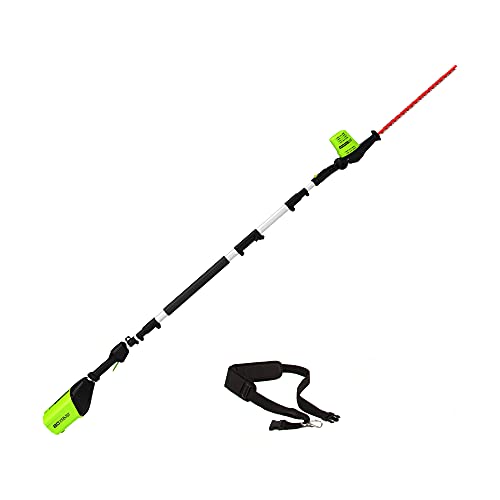
| Greenworks Pro 80V 20" Cordless Pole Hedge Trimmer, Tool Only | Check price on Amazon | 20" dual-action steel | Not stated | 80V battery | No — tool only | Not stated |
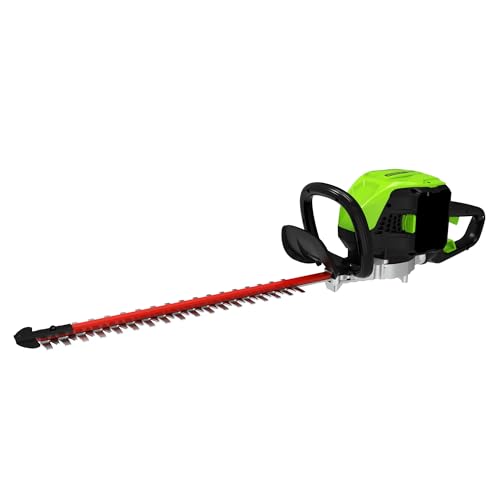
| Greenworks Pro 80V 26" Cordless Hedge Trimmer, Tool Only, Battery Powered, Green | Check price on Amazon | 26" laser-cut steel | Not stated | 80V battery, brushless | No — tool only | Not stated |
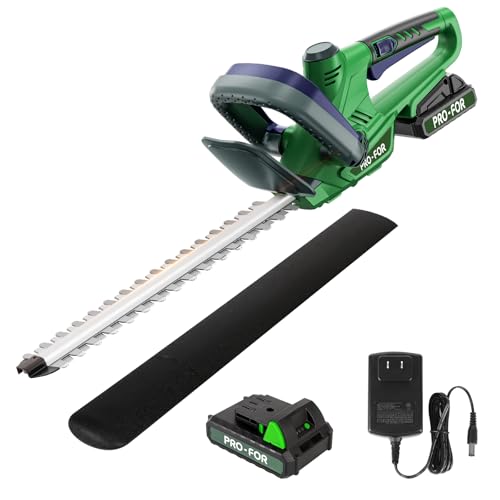
| Cordless Hedge Trimmer with Battery and Charger, 20V... 22" Dual-Action Blade | Check price on Amazon | 22" dual-action | 0.55" | 20V battery | Yes, with charger | 4.5 lb |
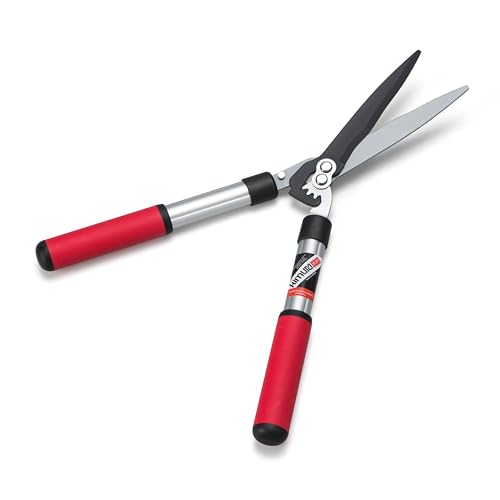
| Kimura Pro Heavy Duty Hedge Shears... 22" Trimmer | Check price on Amazon | 22" (SK5 steel) | Not stated | Manual | N/A | Not stated |
| 2-in-1 Cordless Hedge Trimmer... with 2.0Ah Rechargeable Battery | Check price on Amazon | 4.72" shrub / 3.15" grass | 0.31" | 2000mAh, USB-C charge | Yes | 1.18 lb |
Quick answer: Trimming tall hedges well is mostly about reach, sequence, and a flat cutting plane — not raw power. Get the top slightly narrower than the base, cut sides before top, work in wide sweeping passes rather than nibbles, and use a pole-mounted trimmer instead of a ladder wherever you can. Of the tools listed here, the Greenworks Pro 80V 20" Cordless Pole Hedge Trimmer, Tool Only is the one built specifically for the tall-hedge problem, because it puts the blade above your head without putting you on a ladder.
The technique, before the tool
Most "bad" hedges aren't badly cut, they're badly shaped. Three rules do the heavy lifting:
Taper the sides. Your hedge should be slightly wider at the bottom than the top — a gentle A-shape. If the top overhangs the base, the base gets shaded, drops its leaves, and goes brown and twiggy forever. This is the single most common amateur mistake and it takes years to undo.
Finding the right how to trim tall hedges like a pro comes down to matching the features to how you will actually use it.
Sides first, then the top. Cutting the sides throws clippings and gives you a clean vertical edge to reference. Then you flatten the top last, using those two edges as your guide.
Use string. Run a taut line at your target top height between two stakes. Pros do this. It feels fussy for about ninety seconds and then you never cut a wavy top again.
Sweep, don't nibble. Hold the blade so it's nearly parallel to the hedge face and move it in a slow, wide arc — for vertical faces, sweep bottom-to-top so cut material falls away from the blade. Poking at individual sprigs gives you a lumpy, chewed-looking surface.
Cut little and often. Most hedges want two to three trims a season during active growth. If you're removing wood thicker than your trimmer's rated capacity, you've waited too long and you need loppers, not a trimmer.
The pole trimmer: why it's the tall-hedge answer
The Greenworks Pro 80V 20" Cordless Pole Hedge Trimmer, Tool Only exists for one reason: it mounts 20-inch dual-action steel blades on a pole so you can trim tall hedges and hard-to-reach areas from the ground. That's the whole pitch, and it's the right pitch.
Ladders and hedge trimmers are a genuinely bad combination. You're holding a two-handed cutting tool, standing on an unstable base, on soft ground, often reaching sideways. A pole tool removes that entire category of risk and — bonus — you can walk the length of the hedge continuously instead of repositioning a ladder every four feet, which is exactly why pole-trimmed hedges come out straighter.
Note the model number here is PH80B00 and it's sold as tool only. You need a compatible 80V Greenworks battery and charger separately. Budget for that before you click buy.
Who it's for
- Anyone with hedges taller than they can comfortably reach with arms overhead
- People who already own 80V Greenworks batteries — the platform pays off fast
- Anyone who's been using a ladder and has quietly known it was a bad idea
- Gardeners who want a straight top line over a long run of hedge
Who should skip it
- Anyone with waist- to chest-height hedges only. A pole tool is dead weight and awkward geometry for low work — you'll fight it.
- People with no 80V batteries and no plan to buy into the platform. The $209.89 sticker is the tool alone; a battery and charger materially change the total.
- Anyone doing detailed topiary or tight shaping. Reach tools trade fine control for distance, always.
- Small-yard owners with one or two shrubs. This is more machine than the job needs.
Honest trade-offs
Pole tools are tiring in a different way. They save you the ladder, but you're holding weight at arm's length, often overhead. Expect shoulder and forearm fatigue on long sessions and plan breaks. Lighter isn't automatically better either — a bit of mass damps vibration.
"Tool only" is a real cost, not a footnote. Both Greenworks models here — the pole trimmer at $209.89 and the 26-inch handheld at $218.00 — ship without a battery or charger. If you're starting from zero, you're buying a system, not a tool. That system then makes every subsequent Greenworks 80V purchase cheaper, which is the actual argument for it.
Longer blades cut faster and steer worse. A 26-inch bar covers ground quickly on long straight runs. It's clumsier around corners, ornamentals, and anything you care about the shape of.
Cut capacity is a hard ceiling. The 22-inch PRO-FOR unit is rated to 0.55-inch branches; the 2-in-1 VCAN blade to 0.31 inches. Forcing thicker wood stalls motors, dulls blades, and leaves torn stubs that die back. Reach for loppers instead — no shame in it.
Battery run time is finite. The 26-inch Greenworks is listed at up to 60 minutes with a fully charged 2Ah battery, with a rapid 30-minute charge. Tall hedges eat time. One battery may mean a coffee break mid-job.
What to check on the listing before you buy
Listings change constantly, so verify these yourself rather than trusting any article, including this one:
- Current price. Every figure here is a snapshot. Confirm what the page says today.
- Which variant you're in. This matters enormously with Greenworks. "Tool only" and "kit with battery" often sit on the same listing under different dropdown options. Read the selected variant, not the headline.
- Battery and charger compatibility. The 26-inch model lists compatible battery and charger models GBA80200, GBA80400 and GCH8040. Cross-check against anything you already own.
- Warranty terms and who honors them. Check the manufacturer's stated coverage and confirm the seller is authorized.
- Recent customer reviews. Go read them yourself, filtered to recent and to your specific variant. Reviews on a multi-variant listing can describe a completely different product than the one in your cart.
- What's physically in the box. Blade guard, harness, charger — assume nothing.
Consider instead
Greenworks Pro 80V 26" Cordless Hedge Trimmer, Tool Only, Battery Powered, Green — consider instead if…
…your hedges are long but you can reach the top from the ground or a stable platform. The Greenworks Pro 80V 26" Cordless Hedge Trimmer, Tool Only, Battery Powered, Green runs a DigiPro brushless motor — more reliable, with gas-equivalent performance per Greenworks — behind 26-inch laser-cut steel blades. Up to 60 minutes on a charged 2Ah battery and a rapid 30-minute recharge make it a sensible pick for volume work. Same 80V platform, so it shares batteries with the pole trimmer. At $218.00 it's tool only.
Cordless Hedge Trimmer with Battery and Charger, 20V Battery Powered Hedge Trimmer, 22" Dual-Action Blade, Lightweight Electric Bush Trimmer for Shrubs, Garden & Yard — consider instead if…
…you want to spend once and start today. The Cordless Hedge Trimmer with Battery and Charger, 20V Battery Powered Hedge Trimmer, 22" Dual-Action Blade, Lightweight Electric Bush Trimmer for Shrubs, Garden & Yard includes a 20V lithium-ion battery and fast charger in the box at $59.99. It weighs 4.5 lb with an anti-slip ergonomic grip, runs a 3000 SPM motor behind a 22-inch dual-action blade rated to 0.55-inch branches, and has a double-lock safety switch plus blade guard. The low weight is genuinely relevant for overhead and vertical trimming.
Kimura Pro Heavy Duty Hedge Shears - Premium Garden Clippers with Patented Gearing Technology, Ultra Lightweight Aluminium Handles, Japanese SK5 Steel Blades, Ideal Shears for Gardening - 22" Trimmer — consider instead if…
…you want control over speed, or you're finishing what a powered trimmer roughed in. The Kimura Pro Heavy Duty Hedge Shears - Premium Garden Clippers with Patented Gearing Technology, Ultra Lightweight Aluminium Handles, Japanese SK5 Steel Blades, Ideal Shears for Gardening - 22" Trimmer uses Japanese SK5 steel blades with a PTFE coating to resist sap build-up and rust, on lightweight aluminium handles with soft TPR grips. Patented gearing is claimed to deliver up to 3x more power per cut while reducing hand and arm strain. At $44.99, no battery, no noise, no run-time limit.
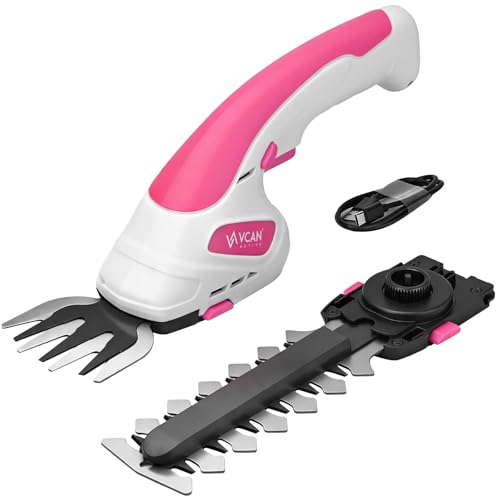
2-in-1 Cordless Hedge Trimmer, Handheld Hedge Trimmer & Cordless Grass Shear with 2.0Ah Rechargeable Battery and Type-C Cable – Electric Grass Trimmer for Garden, Yard, and Lawn(Pink) — consider instead if…
…"tall hedges" isn't really your problem and small shrubs and edges are. The 2-in-1 Cordless Hedge Trimmer, Handheld Hedge Trimmer & Cordless Grass Shear with 2.0Ah Rechargeable Battery and Type-C Cable – Electric Grass Trimmer for Garden, Yard, and Lawn(Pink) swaps between a 4.72-inch shrub blade and a 3.15-inch grass blade with no tools, weighs 1.18 lb, and charges over USB-C from a phone charger, laptop, car port, or power bank. The 2000mAh battery is rated for up to 50 minutes; the hedge blade handles branches to 0.31 inches. At $26.99 it's a detail tool, not a hedge tool.
FAQ
When should I cut a tall hedge? During active growing season, in light repeated passes, is the general rule for most formal hedges. Always check for nesting birds first — in many places disturbing an active nest is illegal, and it's a genuinely good reason to delay a week.
Do I really need to avoid the ladder? Yes, if you have any alternative. Two-handed powered tools plus an unstable base on soft ground is how people get badly hurt. A pole tool like the Greenworks Pro 80V 20" Cordless Pole Hedge Trimmer, Tool Only removes that risk entirely and produces straighter results as a side effect.
Why does my hedge look chewed instead of clean? Usually dull blades, a stop-start cutting motion, or cutting wood thicker than the tool's rating. Sweep in long arcs, keep blades clean of sap, and switch to loppers for anything over the stated cut capacity.
Is a bigger battery platform worth it for one hedge? Only if you'll buy more tools on it. Both Greenworks 80V units are sold tool-only, so a single-hedge owner starting from scratch pays a real premium. If you already have 80V batteries, the math flips completely.
Related guides
- Best Cordless String Trimmers for Homeowners in 2026
- How to Maintain a Chainsaw: Cleaning, Sharpening, and Bar Oil Tips for Longer Life
- Best Backpack Leaf Blowers for Heavy-Duty Fall Cleanup in 2026
Key Takeaways
- Choosing the right how to trim tall hedges like a pro means matching the key features to your specific needs and budget
- Read real customer reviews and check the return policy before you commit
- Compare value across models — the priciest option is not always the best fit