The Numbers That Should Genuinely Scare You
| 10% | Ethanol content in standard U.S. pump gas (E10) — the silent saboteur in your tank |
| 30 days | How long untreated ethanol fuel stays "fresh" before chemical degradation kicks in |
| $180+ | Average cost of a professional carburetor rebuild on a two-stage snow blower |
| 45 min | Time required to do this job right and save yourself the entire spring headache |
| 1st pull | What a properly winterized engine does in November while neighbors are still cranking |
Reviewed by the Editorial Team
Last Updated: June 2026 | Written by: The Editorial Team | Read time: 9 minutes
The 30-Second Truth: If you only do one thing before stashing your gear at season's end, do this one thing: deal with the fuel. Everything else is a footnote to that single, season-saving decision.
After two decades of running, breaking, and rebuilding small engines in an unheated garage that swings from a brutal 12 degrees in January to a sweltering 90 degrees in July, I can tell you with absolute, dead-bolt certainty:
Ethanol-laced gasoline left sitting for six months is the single biggest reason snow blowers, mowers, and string trimmers refuse to start the following season.
Not cold. Not dust. Not bad luck.
Fuel.
Learning how to winterize a snow blower (and the inverse, summerizing your mower) is mostly about respecting what fuel does when it sits quietly in the dark. The good news? Forty-five minutes of focused work in the fall buys you a machine that fires on the first pull next season. Every season. Without fail.
This guide walks through end-of-season storage for snow blowers heading into spring, plus the same logic applied to mowers, trimmers, blowers, pressure washers, and chainsaws heading into winter. The principles are identical. Only the calendar flips.
The Problem: Why Equipment Quietly Dies in Storage
Here's the brutal truth nobody at the big-box store mentioned when you handed over $1,200 for that two-stage beast: modern pump gas in most U.S. states contains up to 10 percent ethanol (E10). And ethanol is hygroscopic — meaning it pulls moisture straight out of the air like a thirsty sponge.
In a vented fuel tank sitting in a humid garage, that fuel absorbs water, separates into ugly cloudy layers, and the gummy, varnish-like residue left behind clogs the microscopic jets inside a carburetor.
By March, your two-stage snow blower — the one that bulldozed through a foot of wet slush in January — now sputters, refuses to idle, or won't fire at all.
And the fuel is only half the horror story. On top of that:
- Lubricants thin out and pool in the bottom of the sump, leaving bearings hanging dry through the off-season
- Rubber primer bulbs crack from violent temperature swings between seasons
- Battery cells sulfate permanently when left disconnected from a maintainer
- Rust blooms on augers and impellers wherever bare metal sat damp on a cold concrete floor
- Mice nest in air filters and chew through wire harnesses (yes, really — ask any small-engine shop)
The fix is not complicated. But it absolutely has to be done in roughly the right order — and you have to actually do it. Skipping a step is exactly how the springtime "why won't this thing start" YouTube clip gets filmed.
Expert Tip: If you smell varnish or a sour-fruit tang when you pop the fuel cap on stored equipment, the fuel has already broken down chemically. Drain it immediately. Do NOT try to start the engine on degraded gas — you will only push the gummy residue deeper into the carburetor jets, turning a 10-minute drain job into a $180 rebuild.
Watch This Before You Touch a Wrench
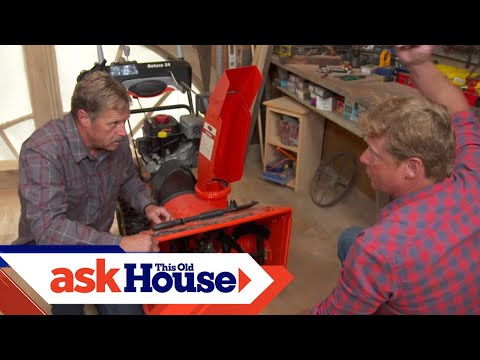
Sometimes the cleanest way to understand a process is to see it done in real time. This short walkthrough covers the exact fuel-stabilizer-and-storage routine we recommend — the same one we've used to keep machines firing on the first pull for years.

The 45-Minute Winterization Workflow
Do these steps in this order. Each one builds on the last. Skip a step and the chain breaks.
Step 1 — Stabilize, Then Burn It Through
Add a quality fuel stabilizer (Sta-Bil, Star Tron, or Sea Foam) to a fresh, full tank. Run the engine for at least 10 minutes so the treated fuel pulls all the way through the carburetor. This is non-negotiable. Stabilizer sitting in a tank does nothing if it never reaches the jets.
Step 2 — Drain or Don't (Pick a Lane and Commit)
There are two valid camps here, and both work if you do them right:
- Camp A — Store full with stabilizer: A completely full, treated tank has less air space for condensation. Best for short off-seasons.
- Camp B — Drain completely dry: Run the carburetor bowl bone-dry. No fuel, no varnish. Best for storage longer than 6 months.
What kills engines is the cursed middle ground: a half-empty tank of untreated gas left to rot. Don't be a Camp C person.
Step 3 — Change the Oil While It's Still Warm
Old oil holds acidic combustion byproducts that quietly eat at bearing surfaces all winter. Drain it while warm, refill with fresh SAE 5W-30 (or whatever your manual specifies), and you've just bought your engine an extra five seasons of life.
Step 4 — Lube Every Cable, Joint, and Linkage
A quick shot of marine-grade grease on auger shafts, chute pivots, and shift linkages prevents the dreaded "frozen control" surprise next December. Pay extra attention to anything that gets wet.
Step 5 — Battery Tender or Bust
If your unit has an electric start, hook the battery to a smart maintainer (NOT a trickle charger from 1985 — those cook batteries). A $25 tender outlasts a $90 battery by years.
Step 6 — Cover It, But Let It Breathe
Skip the airtight plastic tarp. Use a breathable canvas or fitted cover so trapped moisture can escape. And get the unit OFF the bare concrete — a scrap of plywood or a pallet underneath stops capillary moisture from creeping into the metal.
The Mouse Memo: Tuck a few dryer sheets in the engine compartment and stuff a clean rag in the exhaust outlet (with a bright tag hanging out so you remember to pull it). Mice hate the scent, and a blocked exhaust keeps nesting families from moving in.
Same Logic, Different Calendar: Summerizing Your Mower
Every step above applies to mowers, string trimmers, leaf blowers, pressure washers, and chainsaws when they head into winter storage. The fuel is still ethanol. The lubricants still drain. The mice still scout.
A few category-specific notes:
- Mowers: Sharpen the blade before storage so you're ready to mow on day one, and clean the underdeck thoroughly — caked grass holds moisture that rusts the deck from the inside.
- String trimmers & 2-stroke gear: If it burns a fuel/oil mix, drain it completely. Pre-mix degrades even faster than straight gas.
- Pressure washers: Run pump antifreeze through the system. A frozen pump head is a write-off — a $5 jug of antifreeze prevents a $300 replacement.
- Chainsaws: Drain bar oil to prevent leaks, and store the chain in a coil with a light coat of oil.
The Bottom Line
Forty-five minutes. One bottle of stabilizer. A quart of fresh oil. A battery tender and a breathable cover.
That's the entire price of admission for equipment that just works when the first snowflake falls (or the first blade of grass shoots up). Skip it, and you'll spend a Saturday in March cursing at a pull cord while your neighbor's blower roars to life on the first try.
Don't be that Saturday-cursing person. Be the first-pull person.
Your Next Move: Grab a notebook, walk out to your garage right now, and list every gas-powered tool you own. Beside each one, write the date you last changed the oil and treated the fuel. If any answer is "never," you just found your weekend project — and your future self will thank you for it.
Key Takeaways
- Choosing the right how to winterize a snow blower means matching the key features to your specific needs and budget
- Read real customer reviews and check the return policy before you commit
- Also covers: fuel stabilizer for small engines
- Also covers: snow blower storage cover
- Also covers: off season equipment maintenance
- Compare value across models — the priciest option is not always the best fit